NZ issues RfP for surveillance and reconnaissance UAVs
A diagram showing how UAVs will contribute to the Network Enabled Army programme. (NZDF)
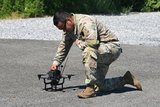
New Zealand has been relatively slow on the uptake of UAVs, but this is about to change as it now looks for three categories of unmanned aircraft.


The New Zealand Defence Force (NZDF) is seeking reconnaissance and surveillance capabilities as part of its ongoing rollout of the Network Enabled Army (NEA) programme, according to an RfP issued on 31 May.
Primarily, the New Zealand Army is looking for proven UAVs and ground-based sensors, with one or more respondents able to deliver capabilities and provide through-life support (including maintenance, technical and operational support, planned upgrades and training).
The NZDF is interested only in military off-the-shelf solutions that are interoperable with international allies. It is not interested in bespoke designs, and it wants to establish enduring relationships with providers.
This effort
Our news & analysis is now part of Defence Insight®
A Basic-level or higher Defence Insight subscription is now required to view this content.


More from Air Warfare
-
![Loyal wingman programmes gather pace as US and European procurement plans take shape]()
Loyal wingman programmes gather pace as US and European procurement plans take shape
Northrop Grumman, Airbus and Anduril are positioning their uncrewed aerial vehicles for future collaborative combat aircraft contracts in a market that is forecast to exceed $36 billion.
-
![India’s military integration drive faces interoperability hurdles]()
India’s military integration drive faces interoperability hurdles
Senior military leaders have highlighted the need for interoperable systems, common data standards and closer cooperation between India's armed services.
-
![UK A400M Saudi deployment highlights airlifter’s role as Airbus pursues upgrades]()
UK A400M Saudi deployment highlights airlifter’s role as Airbus pursues upgrades
Airbus is developing new capabilities for its A400M transport aircraft as European countries consider future airlift requirements and the UK plans to deploy the aircraft to Saudi Arabia.
-
![The new generation of defence companies emerging from the US UAV boom]()
The new generation of defence companies emerging from the US UAV boom
As the Pentagon accelerates procurement of low-cost, lethal UAVs through its Drone Dominance Program, emerging suppliers will need to demonstrate manufacturing capacity, supply chain resilience and reliability.