Norway signs for AMRAAM-D missiles to equip F-35 fleet
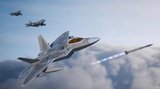
The AMRAAM-D will equip Norway's F-35 fleet in the air defence role, with delivery of missiles running through to 2028. (Photo: Norwegian Armed Forces)
Norway has signed a $500 million dollar agreement for procurement of Raytheon AMRAAM-D missiles to equip its F-35 fighter jet fleet.


The Norwegian Defence Material Agency (NDMA) signed an agreement on 16 November with the US government worth approximately NOK5 billion ($500.3 million) regarding acquisition of AMRAAM-D air-to-air missiles to equip the F-35s of the Norwegian Air Force.
The AMRAAM-D will serve as the main weapon used to defend Norwegian airspace for the next decades and the agreement represents the single largest procurement of munitions for the Norwegian Armed Forces.
Previous versions of AMRAAM have been used on Norwegian Air Force F-16s and as part of the NASAMS ground-based air defence system developed by Norway’s Kongsberg.
‘Through this agreement Norwegian F-35s will... gain access to a weapon that... has major improvements in terms of sensors and range, and which will be effective against everything from drones and cruise missiles to other combat aircraft, said Gro Jære, Director General of the NDMA.
Delivery of the missiles will continue through to 2028 and cost of the procurement will be funded from the overall Norwegian F-35 programme.
Norway has also signed a new industrial cooperation agreement with AMRAAM manufacturer Raytheon, which partnered with Kongsberg on NASAMS.
Earlier this month, another European NATO member, Belgium, initiated the procurement of AMRAAM missiles for its future F-35 fleet via the US FMS route.
Shephard Defence Insight estimates the unit cost of an AMRAAM at around $1,000,000.
Related Programmes in Defence Insight
Related Equipment in Defence Insight



More from Air Warfare
-
![The new generation of defence companies emerging from the US UAV boom]()
The new generation of defence companies emerging from the US UAV boom
As the Pentagon accelerates procurement of low-cost, lethal UAVs through its Drone Dominance Program, emerging suppliers will need to demonstrate manufacturing capacity, supply chain resilience and reliability.
-
![Sophistication versus simplification: the divided future of air-to-air missiles]()
Sophistication versus simplification: the divided future of air-to-air missiles
As global air combat operations continue to evolve at a rate not seen for decades, what will the next generation of air-to-air weapons look like, and what missions will they need to fulfil?
-
![AUSA 2026: New multiwarhead loitering munition enters increasingly competitive market]()
AUSA 2026: New multiwarhead loitering munition enters increasingly competitive market
Heaviside Industries has unveiled its new Tyr loitering munition at AUSA 2026 in Washington, DC, joining a growing field of manufacturers seeking to capitalise on billions of dollars in anticipated military spending.
-
![US military plans multi-UAV trials with Northrop Grumman quantum-navigated Lumberjack]()
US military plans multi-UAV trials with Northrop Grumman quantum-navigated Lumberjack
An undisclosed US military branch is preparing to evaluate multiple Lumberjack Group 3 drones equipped with SandboxAQ’s AQNav magnetic-navigation system. Shephard spoke with Northrop Grumman and SandboxAQ to find out more.