Northrop Grumman reaches AARGM-ER design milestone


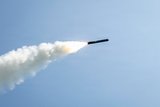
Northrop Grumman has completed its Critical Design Review (CDR) of key components for the USN’s Advanced Anti-Radiation Guided Missile-Extended Range (AARGM-ER) programme, the company confirmed on 18 June.
The most recent verification tests concerned the AARGM-ER rocket motor and warhead along with subsystem and system-level performance.
Gordon Turner, VP Advanced Weapons at Northrop Grumman, said: ‘Rocket motor design verification tests represented a significant knowledge point and milestone for engineering and manufacturing development… These tests were important to informing the CDR and verifying performance of the missile. With our government partners, we are aggressively focused on achieving ‘speed to fleet’ while holding to programme cost objectives.’
The AARGM-ER is to be integrated on the F/A-18E/F Super Hornet and EA-18G Growler fighter aircraft platforms with the possible future use on the F-35A/B/C.
As part of our promise to deliver comprehensive coverage to our Defence Insight and Premium News subscribers, our curated defence news content provides the latest industry updates, contract awards and programme milestones.
Related Equipment in Defence Insight


More from Air Warfare
-
![Leonardo plans to fly uncrewed fighters alongside M-346 aircraft by mid-2026]()
Leonardo plans to fly uncrewed fighters alongside M-346 aircraft by mid-2026
The two uncrewed fighter aircraft will be made in conjunction with Baykar, which joined forces with Leonardo under LBA Systems in June 2025 to develop and produce uncrewed aerial systems for the international market.
-
![UK firm Skycutter comes out top in first US Drone Dominance Program competition]()
UK firm Skycutter comes out top in first US Drone Dominance Program competition
The startup was the only UK company to take part in the first Gauntlet for the programme, joining forces with its Ukraine partner to participate in the event.
-
![Robinson launches new uncrewed aircraft business unit, unveils new UAS cargo platform]()
Robinson launches new uncrewed aircraft business unit, unveils new UAS cargo platform
The new entity incorporates crewed and uncrewed capabilities to tackle a variety of mission demands in both defence and commercial markets.
-
![US plans to raise defence production by 300% but multiple uncertainties remain]()
US plans to raise defence production by 300% but multiple uncertainties remain
The strategy, schedule and budget to support Washington’s intention to speed up the manufacturing of defence capabilities remain unclear.
-
![Switzerland faces procurement shake-up with reduced F-35 buy and five-year Patriot delays]()
Switzerland faces procurement shake-up with reduced F-35 buy and five-year Patriot delays
The reduction in the number of planned F-35A aircraft from 36 to 30 by the Swiss government comes due to budget constraints, with no firm plans to fill the gap despite “negative consequences”.
-
![What will the replacement of A-10s by F-35s mean for the US Air Force?]()
What will the replacement of A-10s by F-35s mean for the US Air Force?
The USAF plans to phase out its 162 in-operation A-10 Thunderbolt II Warthogs by the end of FY2026, replacing them with F-35As which will bring a leap in capabilities in terms of lethality, survivability and speed.