NATO reveals details of C-UAS exercise
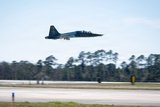
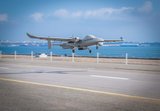
NATO tested various C-UAS systems including the use of nets to bring down UAVs. (Photo: NATO)
During TIE23 some 70 C-UAS systems and technologies from close to 60 companies were tested live. C-UAS technologies tested included kinetic (automated weapon guidance with no live firing) C-UAS systems, UAV-on-UAV (no live flying of the counter UAV), nets, jamming and cyber interceptors.
TIE23 exercise focused on technical interoperability, particularly the ability of systems to connect, communicate and operate with one another.
Participants tested the communication networks and protocols, reported tracks, alerts and images and evaluated other core systems and outputs.
A NATO official acknowledged the current use of UAVs in the conflict between Russia and Ukraine but pointed out the event was
Our news & analysis is now part of Defence Insight®
A Basic-level or higher Defence Insight subscription is now required to view this content.
More from Air Warfare
-
Why Embraer’s C-390 Millennium trajectory continues to climb (updated 2026)
The medium airlift aircraft is swiftly becoming the top pick for an array of countries wishing to enhance their tactical transport capabilities.
-
USAF’s T-7A Red Hawk programme progresses with low-rate production to start in 2026
The T-7A Red Hawk advanced trainer for the US Air Force reaching Milestone C is the first step towards production for the first batch of 14 aircraft, with training expected to start by 2028.
-
Baykar’s Akinci: Local participation and export freedom drive $4.63 billion success story
The success of the Akinci drone stems from Turkey’s push for domestically produced components – which has led to fewer export restrictions – and from manufacturer Baykar’s willingness to coproduce the drone with customers’ domestic industries.
-
Lithuania air focus: Majority of $235.98 million drone investment to be spent before 2030
Lithuania has committed significant funding towards expanding its UAV capabilities, with more than $54 million already spent and substantial additional investment planned through to 2029. Alongside domestic procurement, the country has also acquired various drones to support Ukraine.
-
“A dominant force”: empowering Europe’s airborne ISR in a new era
European militaries face a new security landscape, with the proliferation of drones, theatre ballistic missiles and other threats boosting requirements for airborne intelligence, surveillance and reconnaissance (ISR) and related systems. For L3Harris, missionised business jets are central to meeting these needs, providing capability and flexibility in a cost-effective package.