European next-generation rotorcraft programme moves closer to reality through new MoU
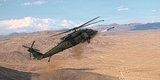
Lockheed Martin is one of three companies conducting a study into NGRC through its subsidiary Sikorsky and its X2 rotorcraft. (Image: Lockheed Martin)
Launched in 2020 and managed by NATO Support and Procurement Agency (NSPA), the Next Generation Rotorcraft Capability (NGRC) programme aims to replace medium multi-role capabilities ending their life cycle in 2035 and beyond.


The five European nations of the NGRC – France, Germany, Italy, the Netherlands and the UK – have signed a Memorandum of Understanding (MoU) that will pave the way for the future of NSPA-managed programme.
This MoU has marked a step towards advancing work on the programme’s concept design phase which is expected to begin in 2026. Through the MoU, the five countries committed to identifying a single preferred solution for the replacement of these capabilities by the end of 2027, thereby enabling the development of the solution in 2030.
The NSPA is currently managing the initial concept studies for the programme. In July 2024, the NSPA awarded contracts to rotorcraft manufacturers Airbus, Leonardo and Sikorsky to carry out integrated platform concept studies, also known as Study Five.
These studies – each comprising up to two concepts – will be delivered in October 2025, enabling NSPA to prepare its report to the nations.
NGRC will replace a range of helicopters such as AW101s, UH-60 Black Hawks, Super Pumas and NH90s. The UK is pushing ahead with its New Medium Helicopter programme but remains part of the NGRC.
Canada, also officially part of the programme, has been looking to replace its fleet of Bell CH-146 Griffon helicopters beyond 2035. It has also been monitoring the efforts of its southern neighbour’s Future Vertical Lift (FVL) programme.
Related Programmes in Defence Insight
EU next generation rotorcraft technologies project (ENGRT) - [Italy]
Related Equipment in Defence Insight


More from Air Warfare
-
![Saab’s GlobalEye gains ground as Canada’s aircraft procurement tilts towards Europe]()
Saab’s GlobalEye gains ground as Canada’s aircraft procurement tilts towards Europe
Canada’s interest in negotiating a procurement of Saab’s GlobalEye airborne early warning and control aircraft signals its readiness to reduce its reliance on US defence technology as trade tensions with its North American neighbour mount.
-
![US Air Force CCA programme to achieve multiple milestones in the coming months]()
US Air Force CCA programme to achieve multiple milestones in the coming months
The US Air Force is preparing to select mission-autonomy software, fire a missile from the FQ-42 Vengeance and test both CCA designs alongside crewed fighters at 2026 Emerald Flag.
-
![South American EW demand balances capability against cost]()
South American EW demand balances capability against cost
South American air forces are weighing advanced electronic warfare capabilities against limited budgets as Peru selects Viper Shield and BAE Systems targets smaller airborne platforms.
-
![Will the US Navy F/A-XX and the USAF F-47 compete for production capacities?]()
Will the US Navy F/A-XX and the USAF F-47 compete for production capacities?
The two sixth-generation fighter programmes could battle for engineering talent and production lines before deliveries begin, testing Boeing’s industrial expansion plans.
-
![September drone digest: attrition-tolerant aircraft pitched to replace the Reaper]()
September drone digest: attrition-tolerant aircraft pitched to replace the Reaper
The loss of many MQ-9 Reapers during the 2026 Iran War has underscored the risks of sending relatively expensive UAVs into contested airspace. In September, new contenders to replace the Reaper emerged, championing cheaper, modular aircraft designs for mass production and inevitable attrition.