Lockheed Martin unveils new scalable counter-UAS system
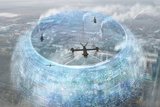
Lockheed’s latest unnamed C-UAS system at the recent field demonstration. (Photo: Lockheed Martin)
The scalable system was flown during a company-funded exercise to demonstrate its ability to detect, track and mitigate a mix of small uncrewed aerial systems, including drone swarms.


Lockheed Martin has unveiled a new counter-uncrewed aerial system (C-UAS), designed to detect, track, identify and counter UAS.
According to the company, the system has a modular design, which allows for the rapid integration of a range of sensors and C2 enhancements. It also combines C2 with AI-enabled track and detection software, sensors and an array of effectors.
The use of AI-driven software also enhances threat detection and mitigation capabilities which, Lockheed said, improves efficiency against individual UAS threats or drone swarms.
Tyler Griffin, C-UAS director at Lockheed Martin, said: “Our open architecture approach offers an agile, layered defence solution that accelerates outcomes relative to this dynamic threat. This foundational demo highlights how we can deliver the mission today and sets the stage for what Lockheed Martin and our partners will deliver in weeks and months ahead.”
Lockheed Martin successfully showcased its solution in a recent field test, reportedly the first in a planned series of events to demonstrate the scalable defence system to partners.
The company has previously unveiled and developed MORFIUS, a counter-UAS system, designed to take on drones and drone swarms.

You may also like
More from Air Warfare
-
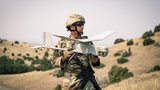
![Ageing RQ-11 Raven fleets create a global replacement opportunity]()
Ageing RQ-11 Raven fleets create a global replacement opportunity
The RQ-11 Raven is being retired from service across most of its more than 30 operators. Defence Insight estimates that these Raven retirements open up a replacement market worth at least $576 million, but suppliers will have to act quickly and strike a balance between cost and capability to succeed.
-
![Shield the warfighter, win the fight (video)]()
Shield the warfighter, win the fight (video)
BAE Systems’ Intrepid Shield™ approach delivers full-spectrum electromagnetic protection to detect, exploit, and counter advanced threats.
-
![August drone digest: AEVEX solidifies large US loitering munition market share as procurement models shift]()
August drone digest: AEVEX solidifies large US loitering munition market share as procurement models shift
AEVEX has strengthened its position in the US loitering munition market with another contract award, solidifying its position as the second-largest supplier of the capability in the US. Elsewhere in August, new and emerging programmes in Sweden and Germany point to a broader shift towards larger, rolling framework agreements for loitering munitions across Europe.
-
![US Air Force awards Boeing $131 billion F-15 contract to sustain Eagle fleet through 2037]()
US Air Force awards Boeing $131 billion F-15 contract to sustain Eagle fleet through 2037
The agreement supports F-15 production, modernisation and sustainment for the US and seven international operators.
-
![Saab re-emphasises Gripen hopes in the light of US-Canada trade tariff argument]()
Saab re-emphasises Gripen hopes in the light of US-Canada trade tariff argument
Saab Aerospace has seen as surge in orders for its Gripen fighter aircraft and GlobalEye airborne early warning and control systems, including an agreement to provide the latter to Canada, even as it positions Gripen for the same country.