Leidos gains contract modification for Saturn Arch
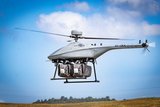
The Saturn Arch Program has benefitted from a diverse variety of thought and new approaches to develop the program in innovative ways. (Photo: US Army)
Leidos has been awarded a contract valued at almost $13 million for the Saturn Arch programme.


Leidos has been awarded a contract modification valued at $12.76 million for the Saturn Arch Aerial Intelligence Systems Quick Reaction Capability programme.
Saturn Arch is an aerial IED-neutralising programme that began in 2010.
The original purpose of the programme is to develop ISR capabilities for specialist aircraft fitted with state of the art sensor technology to identify and assist in removing IEDs from the battlefield in Afghanistan.
However, the aim of the programme has since expanded. There are more high-tech tools available to the programme and so the mission has become the pursuit of making the battlespace as safe as possible for service members while providing them with a clear operational picture.
Saturn Arch is able to provide support through the use of constant intelligence collection and rapid distribution of their intelligence products.
As a result of this evolution, Saturn Arch today acts as a capability in the sky for all hostile enemy actions.



More from Air Warfare
-
![V-22 Osprey safety upgrade moves towards wider fleet installation under $35.5 million deal]()
V-22 Osprey safety upgrade moves towards wider fleet installation under $35.5 million deal
Bell Boeing will supply 73 additional ODSSHI kits as NAVAIR prepares to introduce predictive drive-system monitoring across US and Japanese V-22 fleets.
-
![AFA 2026: USAF examines uncrewed cargo aircraft for contested logistics]()
AFA 2026: USAF examines uncrewed cargo aircraft for contested logistics
The US Air Force is evaluating demonstrators for uncrewed cargo missions as it considers logistics requirements across the Pacific and other contested environments.
-
![Europe risks losing control of CUAS production capacity as manufacturers look abroad]()
Europe risks losing control of CUAS production capacity as manufacturers look abroad
European counter-drone developers are securing early orders in the Middle East while slow domestic acquisition processes threaten to redirect production capacity, expertise and investment away from Europe.
-
![India’s rotary-wing capability gap grows as IMRH programme delays persist]()
India’s rotary-wing capability gap grows as IMRH programme delays persist
With IMRH and DBMRH potentially years from service, India faces a widening rotary-wing capability gap that could drive further foreign purchases even as HAL and Safran build the foundations of an indigenous successor.
-
![AFA 2026: Swarm Aero eyes 2027 Gamera flight as Textron/Merlin reveal SkyCourier UX]()
AFA 2026: Swarm Aero eyes 2027 Gamera flight as Textron/Merlin reveal SkyCourier UX
Two new uncrewed aircraft concepts target very different US military requirements, from massed long-range strike to autonomous logistics. Shephard spoke with executives from Swarm Aero, Textron Aviation and Merlin Labs at this year's AFA Air, Space & Cyber conference to learn more about their capabilities.