KAI to develop mine countermeasures helicopter for South Korean navy
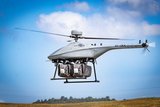
KAI will develop an indigenous airborne mine countermeasures helicopter based on the Marineon. (Image: KAI)
The decision by the Republic of Korea Navy means KAI will be third company in the world to develop a dedicated minesweeping helicopter.


On 22 December, the same day as Korea Aerospace Industries (KAI) received a production contract for the first production examples of the Light Attack Helicopter, the same company was awarded a development contract for an airborne mine countermeasures helicopter.
This project is worth KRW347.7 billion ($272 million). It is due for completion by November 2026, by which stage a prototype will exist.
The resulting helicopter would be used by the Republic of Korea Navy (ROKN) for counter-mine tasks.
It will be based on the existing MUH-1 Marineon platform, itself a variant of the Surion. This will reduce developmental
Our news & analysis is now part of Defence Insight®
A Basic-level or higher Defence Insight subscription is now required to view this content.



More from Air Warfare
-
![Rafale AI trials highlight shift towards operational fighter testbeds]()
Rafale AI trials highlight shift towards operational fighter testbeds
Dassault’s latest Rafale trials join Gripen E and F-16 testing as developers explore how artificial intelligence could support and control combat aircraft.
-
![AFA 2026: US Air Force examines uncrewed cargo aircraft for contested logistics]()
AFA 2026: US Air Force examines uncrewed cargo aircraft for contested logistics
The US Air Force is evaluating demonstrators for uncrewed cargo missions as it considers logistics requirements across the Pacific and other contested environments.
-
![Germany air focus: Europe’s leading near-term air market targets domestic industry]()
Germany air focus: Europe’s leading near-term air market targets domestic industry
Between 2026 and 2032, almost a quarter of EU aircraft spending is expected to come from Germany. While crewed programmes seek modernisation and replacement, uncrewed opportunities look to introduce entirely new capabilities, with both highlighting sovereignty and domestic production.
-
![Europe risks losing control of CUAS production capacity as manufacturers look abroad]()
Europe risks losing control of CUAS production capacity as manufacturers look abroad
European counter-drone developers are securing early orders in the Middle East while slow domestic acquisition processes threaten to redirect production capacity, expertise and investment away from Europe.