KAI floats MC-X transport and carrier-based KF-21N concepts
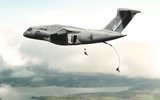
KAI unveiled a scale model and specifications for its proposed MC-X multirole cargo aircraft at DX Korea 2022. (KAI)
Buoyed by successes on the international market, South Korean aerospace firm KAI aims high with new transport aircraft and carrier-borne fighter ideas.


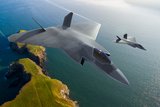
Korea Aerospace Industries (KAI) used the occasion of the biennial DX Korea exhibition in Seoul from 21 to 25 September to show off new aircraft concepts. They included a medium transport aircraft, a carrier-based version of the KF-21 fighter and a special forces variant of the Light Armed Helicopter (LAH).
KAI has discussed before its intention of developing a jet-engine medium transport aircraft, and at DX Korea 2022, a concept model was labelled the MC-X Orca.
In payload capacity size, it slips in between the 26t Embraer KC-390 and 32t Kawasaki C-2. Pictures show the presence of an
Our news & analysis is now part of Defence Insight®
A Basic-level or higher Defence Insight subscription is now required to view this content.

More from Air Warfare
-
![Singapore’s interest in GCAP reflects its long-term approach to air power]()
Singapore’s interest in GCAP reflects its long-term approach to air power
A potential interest in joining GCAP is indicative of Singapore’s long-term and methodical approach to defence procurement and could benefit its local defence industry.
-
![Extending mission readiness: where XR adds real value in pilot, crew and maintenance training]()
Extending mission readiness: where XR adds real value in pilot, crew and maintenance training
Extended reality (XR) is becoming increasingly relevant in military aviation training, adding a flexible layer to an integrated ecosystem spanning the pilot, crew, and maintenance domains.
-
![US military tests AI-powered CUAS turret against drone swarms]()
US military tests AI-powered CUAS turret against drone swarms
As the US continues to invest heavily in counter-drone systems, demand for low-cost, mobile and autonomous technologies is on the rise, with Edda designed to align with these emerging requirements.
-
![August crewed air review: KC-390 momentum builds as demand in the tanker market grows]()
August crewed air review: KC-390 momentum builds as demand in the tanker market grows
The KC-390 is building a growing international operator base, but competition in the transport and tanker market is increasingly likely to depend on interoperability, commonality and the strength of supporting ecosystems. Meanwhile, Boeing’s KC-46 and Airbus’s A330 also gained ground in August.