Italy puts extra €1.8 billion toward Tempest/FCAS funding
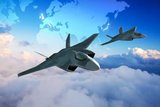
Italy has a number of industrial partners tied to the Tempest/FCAS programme including Leonardo and Elettronica (Photo: BAE Systems)
Italy is to invest heavily in the multinational Tempest/FCAS programme.


Italy has approved of €1.8 billion ($1.82 billion) in additional funding for the Tempest/Future Combat Air System (FCAS) programme.
The new spending represents a sizeable jump from Italy’s initial €2 billion ($2.02 billion) contribution over 15 years to the sixth-generation fighter effort.
That funding, announced by Rome in August 2021, arrived before the UK committed to fly a Tempest demonstrator inside the next five years.
According to a translated version of the latest defence budget report (2022-2024) from the Italian MoD: ‘On the subject of emerging technologies, we have contemplated a significant refinancing to the research and development programme for the sixth
Our news & analysis is now part of Defence Insight®
A Basic-level or higher Defence Insight subscription is now required to view this content.


More from Air Warfare
-
![The 2020s: a decade of UAV spending growth]()
The 2020s: a decade of UAV spending growth
Total annual drone spending has increased nearly sixfold since the start of the decade, from $2.9 billion in 2020 to $16.3 billion in 2028, with Europe leading the rise.
-
![July drone digest: Sovereign production takes centre stage at Farnborough]()
July drone digest: Sovereign production takes centre stage at Farnborough
Farnborough International Airshow (FIA) 2026 revealed the growing scale of the UK’s uncrewed ambitions, with companies showcasing new CCA, autonomous wingmen and surveillance drones, while sovereign production emerged as a key factor for multiple programmes.
-
![July air forces review: Farnborough steals the headlines as programmes develop]()
July air forces review: Farnborough steals the headlines as programmes develop
The biannual Farnborough International Airshow 2026 was the backdrop in July for scores of deals, partnerships and announcements, including developments in the multinational next-generation Global Combat Air Programme and the UK’s $486 million trainer aircraft requirement.
-
![FIA 2026: Bell highlights MOSA-driven growth path for MV-75 Cheyenne]()
FIA 2026: Bell highlights MOSA-driven growth path for MV-75 Cheyenne
Bell Flight’s modular open-systems approach for the US Army’s MV-75 Cheyenne could open doors for international allies and suppliers once locked out by closed rotorcraft architectures.
-
![Maximise survivability with advanced electronic warfare (video)]()
Maximise survivability with advanced electronic warfare (video)
BAE Systems’ all-digital EW delivers 360-degree threat awareness in contested environments, boosts survivability, and cuts lifecycle costs.