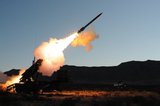
Inside Hamas' Arsenal: Rockets, drones, loitering munitions and tactics deployed in the assault on Israel
Hamas claims its Shebab loitering munition is capable of avoiding the Israeli Iron Dome interceptors due to its ability to fly close to the ground. (Photo: Hamas/Telegram)
Hamas has stunned experts with a sophisticated assault on Israel, leveraging Iranian-backed weaponry and training. The attack, featuring swarms of rockets and UAVs, has revealead a diverse arsenal, including the the Al-Zawari UAV and the repurposed Shebab drone.


Western intelligence analysts and military experts have expressed amazement at the stealth and sophistication of the Hamas assault launched on Israel on 7 October. The offensive, believed to have been supported by Iranian weaponry and training, was supplemented by swarms of rockets and UAVs.
While the Palestinian militia has capable assembly lines for both missiles and drones, intelligence officials believe the scale of the latest attack indicates substantial outside help.
Rockets used by Hamas
The Qassam rocket, an unsophisticated weapon manufactured in garages and backroom laboratories, is the mainstay of Hamas’ arsenal. It is not a very effective missile, but its
Already have an account? Log in
Want to keep reading this article?


More from Air Warfare
-
![UK firm Skycutter comes out top in first US Drone Dominance Program competition]()
UK firm Skycutter comes out top in first US Drone Dominance Program competition
The startup was the only UK company to take part in the first Gauntlet for the programme, joining forces with its Ukraine partner to participate in the event.
-
![Robinson launches new uncrewed aircraft business unit, unveils new UAS cargo platform]()
Robinson launches new uncrewed aircraft business unit, unveils new UAS cargo platform
The new entity incorporates crewed and uncrewed capabilities to tackle a variety of mission demands in both defence and commercial markets.
-
![US plans to raise defence production by 300% but multiple uncertainties remain]()
US plans to raise defence production by 300% but multiple uncertainties remain
The strategy, schedule and budget to support Washington’s intention to speed up the manufacturing of defence capabilities remain unclear.
-
![Switzerland faces procurement shake-up with reduced F-35 buy and five-year Patriot delays]()
Switzerland faces procurement shake-up with reduced F-35 buy and five-year Patriot delays
The reduction in the number of planned F-35A aircraft from 36 to 30 by the Swiss government comes due to budget constraints, with no firm plans to fill the gap despite “negative consequences”.
-
![What will the replacement of A-10s by F-35s mean for the US Air Force?]()
What will the replacement of A-10s by F-35s mean for the US Air Force?
The USAF plans to phase out its 162 in-operation A-10 Thunderbolt II Warthogs by the end of FY2026, replacing them with F-35As which will bring a leap in capabilities in terms of lethality, survivability and speed.