Indian Army fast-tracks the acquisition of hundreds of UAVs
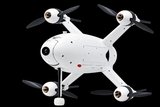
This is the Netra V4 quadcopter that has already been supplied to the Indian Army. (IdeaForge)
Three different RfPs in close succession reveal the Indian Army’s desperation to get UAVs into the hands of soldiers.


The Indian Army is on the hunt for various UAVs, as demonstrated by a flurry of three RfIs issued in late October via the ‘Buy (Indian)’ category of Delhi’s procurement regulations.
The first was a request for a technical and commercial proposal procurement of 750 state-of-the-art UAVs, this document being published on 25 October.
These UAVs will be operated by Parachute (Special Forces) battalions and will routinely be operated behind enemy lines. Able to operate day/night, they need the ability to scan a target area from which a 3D scanned image can be gleaned for special missions.
The UAVs will
Our news & analysis is now part of Defence Insight®
A Basic-level or higher Defence Insight subscription is now required to view this content.


More from Air Warfare
-
![Connecting the layers: how networks can secure the future of European air defence]()
Connecting the layers: how networks can secure the future of European air defence
The rise of drones has reshaped the threat landscape for all European militaries. For industry, future defensive strategies must carefully balance a mix of passive and active measures to address the evolving danger, based around a highly integrated and responsive network of sensors and effectors.
-
![Germany could secure greater influence through sixth-generation fighter partnership with Sweden and Spain]()
Germany could secure greater influence through sixth-generation fighter partnership with Sweden and Spain
Germany is assessing potential pathways for a future sixth-generation fighter capability, including discussions with GCAP partners and Sweden.
-
![UK eyes lightweight satellite communications for UAVs]()
UK eyes lightweight satellite communications for UAVs
The UK is seeking to extend the operational reach of uncrewed aerial vehicles, reflecting growing demand for compact, energy-efficient technology to support beyond-line-of-sight operations.
-
![Loyal wingman programmes gather pace as US and European procurement plans take shape]()
Loyal wingman programmes gather pace as US and European procurement plans take shape
Northrop Grumman, Airbus and Anduril are positioning their uncrewed aerial vehicles for future collaborative combat aircraft contracts in a market that is forecast to exceed $36 billion.