How uncrewed rotary platforms are shaping approaches to contested logistics
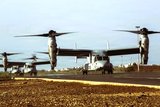
Airbus is developing its MQ-72C for the USMC’s Aerial Logistics Connector demonstration programme. (Photo: Airbus US Space and Defense)
Defence industry primes are working on an array of different platforms to meet the growing need for rotary uncrewed aerial vehicles to carry out future logistics missions.


The development of uncrewed rotorcraft is changing the way armed forces approach logistics management in contested environments, with companies like Airbus at the forefront of developing platforms to meet this demand.
Adapted from their crewed variants, uncrewed rotorcraft are increasingly being envisioned as part of future force structures by many armed forces – ideal platforms for work that is “dull, dirty or dangerous” which is currently carried out by crewed aircraft.
Initially developed to enhance operational capabilities and complement crewed platforms, with a view to eventually becoming fully autonomous, these uncrewed aircraft are being developed to carry out mission roles ranging from intelligence, surveillance and reconnaissance (ISR) to logistics.
Related Articles
Sikorsky emphasises localised Black Hawk conversion for uncrewed U-Hawk
Airbus MQ-72C Lakota Connector progress on track ahead of pending USMC decision
Robinson launches new uncrewed aircraft business unit, unveils new UAS cargo platform
Speaking to Shephard, Carl Forsling, director of business development and strategy at Airbus US Space and Defense, said the company is continuing to advance its work on the MQ-72C Lakota Connector for the US Marine Corps’ (USMC) Aerial Logistics Connector (ALC) programme.
Since 2025, Airbus has conducted several flight tests with increasing levels of autonomy, sensor integration and the integration of other capabilities requested by Naval Air Systems Command (NAVAIR). Further tests are scheduled to continue into 2026, Forsling noted.
“Logistics is an under-appreciated part of manned-unmanned teaming,” Forsling said. “As far as finding that balance…a lot of it is centred around ISR. I think there’s just as big a place in there, and we see it in logistics, bringing equipment to where it’s needed.”
While Airbus sees its MQ-72C as pivotal to meeting demand for autonomous logistics in contested environments, the company previously told Shephard that there was space for further mission sets to be considered for the MQ-72C – once the platform’s core capability has matured.
While tests are ongoing, as the aircraft becomes more autonomous, Airbus is envisioning airframe changes on the MQ-72C in future.
“As we go to a later stage of testing and production, we want to fully leverage the capability of going fully autonomous…We’re going to see cargo accommodations, we’ll have a cockpit open up the front door to allow us to carry larger cargo than we’re currently doing [with] the side doors,” Forsling explained, adding that the platform would still retain rear clam shell and side doors.
Acceleration to place autonomy on rotorcraft
Officials speaking at the Defence IQ International Military Helicopter (IMH) conference in February said the introduction of rotary uncrewed aerial vehicle (UAV) platforms could “dramatically change” the ability of armed forces to sustain force.
Alongside the MQ-72C Lakota Connector, ongoing efforts are being made by other industry primes around developing uncrewed rotorcraft, with many eyeing their potential use for future logistics missions. Many of these programmes under development rely heavily on the reuse and adaptation of existing crewed platforms.
At IMH, Airbus Helicopters revealed it is working on developing a concept for an uncrewed version of the H145M, stating that it was “actively looking” to add autonomy to the helicopter for European customers. The platform could be used to carry cargo payloads – with the most important mission sets still under consideration.
In March 2026, Robinson Unmanned – the new business unit for Robinson Helicopters – unveiled the R66 Turbinetruck, a new dual-use UAS cargo platform designed to support contested logistics.
Sikorsky is also working on developing its S-70UAS U-Hawk which is an uncrewed version of the manufacturer’s crewed UH-60L Black Hawk helicopter.
The company previously told Shephard that the aircraft design went from concept to concrete in 10 months. First flights are planned for 2026 and production is slated to start at the end of the year. A Sikorsky official noted the pair – the R66 Turbinetruck and U-Hawk – act as “complementary bookends” to meet emerging customer demands.
Related Programmes in Defence Insight
Aerial Logistics Connector (ALC) [USMC]
Related Equipment in Defence Insight


More from Air Warfare
-
![V-22 Osprey safety upgrade moves towards wider fleet installation under $35.5 million deal]()
V-22 Osprey safety upgrade moves towards wider fleet installation under $35.5 million deal
Bell Boeing will supply 73 additional ODSSHI kits as NAVAIR prepares to introduce predictive drive-system monitoring across US and Japanese V-22 fleets.
-
![India’s rotary-wing capability gap grows as IMRH programme delays persist]()
India’s rotary-wing capability gap grows as IMRH programme delays persist
With IMRH and DBMRH potentially years from service, India faces a widening rotary-wing capability gap that could drive further foreign purchases even as HAL and Safran build the foundations of an indigenous successor.
-
![AFA 2026: Swarm Aero eyes 2027 Gamera flight as Textron/Merlin reveal SkyCourier UX]()
AFA 2026: Swarm Aero eyes 2027 Gamera flight as Textron/Merlin reveal SkyCourier UX
Two new uncrewed aircraft concepts target very different US military requirements, from massed long-range strike to autonomous logistics. Shephard spoke with executives from Swarm Aero, Textron Aviation and Merlin Labs at this year's AFA Air, Space & Cyber conference to learn more about their capabilities.