Open menu Search

GCAP remains bright spot in UK rearmament efforts as international prospects widen

21st July 2026 - 09:08 GMT | by ​Neil Thompson in London, UK

RSS

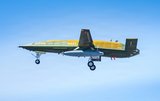
The three national partners are developing the aircraft under the Edgewing joint venture. (Image: BAE Systems)

Funding for the programme is secure – for now – while future opportunities to join Japan, Italy and the UK could tempt other Western partners to join the joint fighter development project.

Canada is expected to announce its intent to join the Global Combat Air Programme (GCAP) as an observer at this week’s Farnborough International Airshow, sources told media outlet Politico last week. While officials have so far neither confirmed nor denied this development, it would be another sign that GCAP is seen as increasingly viable by defence stakeholders, despite past fears about the complexity of coordinating a trilateral fighter jet programme between Italy, Japan and the UK. 

Months of uncertainty over what funding commitments the UK would make in its Defence Investment Plan (DIP) had threatened to collapse GCAP the way France and Germany’s Future Combat Air System (FCAS) initiative self-destructed in June. Instead, GCAP is gaining momentum while the UK is stabilising on defence.

UK government commits to the programme

As the UK’s new prime minister Andy Burnham takes office this week, he is set to benefit from outgoing leader Sir Keir Starmer finally pushing through the UK’s much delayed DIP this summer. 

FCAS future fighter jet collapse: where does Europe’s next-generation air power go next?

UK Defence Investment Plan: What does it mean for UK air power?

Canadian observer status reinforces GCAP’s strength in emerging ‘middle power’ bloc

The plan has critics, but its publication enabled the UK’s Ministry of Defence (MoD) to announce in early July that it was awarding a £4.6 billion (US$6.19 billion) contract to Edgewing, the multinational consortium made up of BAE Systems, the Mitsubishi-linked Japan Aircraft Industrial Enhancement and Italy’s Leonardo that are jointly building the sixth-generation fighter jet platform. The DIP also confirmed the UK would commit £8.6 billion overall to GCAP over the next four years, ending months of uncertainty about the country’s financial commitment for the defence firms involved.

This is expected to reduce the risk of potential friction with the partner nations about funding shortfalls and slipping timetables on the programme. “This is the first time the UK government has committed realistic funding levels for GCAP as a full-scale fighter programme,” Dr Justin Bronk, a senior research fellow for airpower and technology in the Military Sciences team at the Royal United Services Institute in London, told Shephard. “The funds allocated over the first four years of the DIP are [also], broadly speaking, in line with what each of the three countries involved in GCAP expect to be investing at this stage [of the programme].”

GCAP remains roughly on schedule

The UK’s delayed DIP had raised Japanese fears of a funding gap that might delay GCAP’s projected completion date of 2035, or force Tokyo to shoulder more of the cost for developing the fighter. However, GCAP is now moving from a national level to an integrated international development programme that roughly maintains the three governments’ deployment target. 

While Dr Bronk is sceptical that there will be no slippage, he believes the new fighter design will enter into service roughly on time. “The picture is mixed regarding GCAP’s entry into service by the programme’s target of 2035,” he claimed. “The fighter is unlikely to enter service exactly in 2035, [as] there will be at least a year or two of delay due to recent funding issues. However, GCAP has done incredibly well compared to similar programmes [like FCAS].”

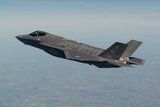
GCAP aims to replace the RAF’s and Italian Air Force’s Eurofighter Typhoon and Japan’s Mitsubishi F-2. (Photo: Crown Copyright)

GCAP is now the only major sixth-generation fighter development programme open to additional partners following the collapse of FCAS last month. The renewed momentum around the project has led to increased international interest in what it represents. Despite heightened interest in uncrewed aerial vehicles (UAVs) driven by the conflicts in Ukraine and the Strait of Hormuz, countries still need fighter jet fleets, albeit ones that can work with autonomous systems and AI-enabled technology.

“Ukraine is desperately trying to build a large, piloted fighter force,” Dr Bronk explained. GCAP is being designed to integrate with uncrewed systems and emerging digital technologies more easily than older generation fighters like the UK’s Typhoon.

Early stage could enable integration

The development of the Tempest sixth-generation fighter, as it is known in the UK, remains at an early stage. Speaking to Shephard, Douglas Barrie, senior fellow for military aerospace at the International Institute for Strategic Studies (IISS), warned: “The first [Tempest] airframe hasn’t been built yet. Only the Combat Air Demonstrator has been built, to flush out risk. It is always expensive [to design a new fighter], and you’re always going to have supply chain issues [as the programme progresses].”

The fact it remains at an early stage despite the UK having already invested £2.7 billion over the last two years may actually improve GCAP’s current attractiveness to smaller Western stakeholders looking to join post-FCAS, however. GCAP’s timeline gives potential entrants like Canada time to find ways they can contribute expertise or manufacturing capability. This might create a band-wagoning effect that sees GCAP become the new prototype for how medium powers can run joint international development programmes. This approach can help parties looking to burden-share as they integrate expensive new digital technologies into their forces.

Fresh opportunities for future partnerships

Despite the project’s ambitious deadlines, GCAP participants have experience of building complex fighter systems, and the firms involved are aware of potential issues facing the programme and will try to minimise them, according to Barrie. 

For the UK, it remains central to replacing the Typhoon fighter jet as the core of the country’s crewed air fleet, providing the RAF and its allies with a highly advanced military capability to counter an increasingly complex data-driven battlespace once it enters service around the middle of the next decade. While the delays and uncertainty around the DIP are unlikely to be the programme’s final hurdle, the momentum it has built up now offers fresh commercial opportunities for new stakeholders to join in. 

Canada is unlikely to be the last Western government to take observer status in GCAP, and national firms in potential later arrivals could benefit as these governments would offer new financial support to the incoming fighter platform.

Global Combat Air Programme [UK]

Global Combat Air Programme [Italy]

Global Combat Air Programme (GCAP) [Japan]

​Neil Thompson

Author

​Neil Thompson


Neil Thompson is a freelance journalist for Shephard and other publishers. He currently works as …

Read full bio

Share to

Linkedin