Galvion delivers charging stations to AeroVironment and begins follow-up order
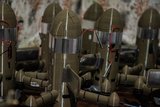
Another 800 MAX-8s will be delivered over the next two years. (Photo: Galvion)
Galvion’s Nerv Centr MAX-8 is a portable charging solution built for expeditionary operations and can be used across AeroVironment’s small Uncrewed Aircraft Systems (sUAS).


Galvion has delivered 400 Nerv Centr MAX-8 charging stations to AeroVironment for use with sUAS and is preparing to deliver a further 800 units in 2025–26 as part of a long-term purchasing agreement.
MAX-8 is a pelican-case portable charging solution with the ability to draw power from multiple sources, including AC, solar and vehicle. It is able to charge different types of UAS and other batteries simultaneously, with no setting changes needed.
Galvion worked with AeroVironment to develop a universal adapter to interface across the latter’s sUAS family and the two companies will collaborate on future UAS charging solutions to meet evolving needs.
Neither the value of the contract nor the sUAS or operator country were disclosed but there have been several substantial sales in the past few years which may relate to the MAX-8 order.
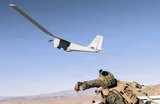
AeroVironment’s Puma 3 is one of the company’s more popular sUAS.
In September 2022, the company announced it had received two firm-fixed-price US Foreign Military Sales contracts worth US$20.9 million to provide platforms to two unnamed allied nations.
In July 2022, the company received an $11.2 million contract modification from the US Army to provide an undisclosed number of Puma 3 with an estimated completion date of 31 July 2023.
The US Air Force, Uzbekistan, New Zealand and the NATO Support and Procurement Agency have also ordered Puma sUAS in the past three years.
Related Equipment in Defence Insight

More from Air Warfare
-
![How India’s FCAS ambitions could reshape its combat-air roadmap]()
How India’s FCAS ambitions could reshape its combat-air roadmap
Participation in the French-led programme could provide India with access to sixth-generation technologies but force difficult choices over AMCA, TEDBF and indigenous propulsion development.
-
![Pentagon’s 800% PAC-3 MSE surge faces production bottleneck as Patriot demand soars]()
Pentagon’s 800% PAC-3 MSE surge faces production bottleneck as Patriot demand soars
The Pentagon wants to procure 3,203 PAC-3 MSE interceptors in FY2027, but production constraints and international demand could impact efforts to rebuild depleted missile stocks.
-
![Canada targets 2028 operational debut for AIM-9X and AIM-120D missiles]()
Canada targets 2028 operational debut for AIM-9X and AIM-120D missiles
The missile programmes form part of a broader effort to strengthen Canadian air-combat readiness as the RCAF transitions from the CF-188 to the F-35A and rebuilds its operational weapons stocks.
-
![AIM-260 JATM deal puts Australia’s missile-industrial ambitions in focus]()
AIM-260 JATM deal puts Australia’s missile-industrial ambitions in focus
While a potentially accelerated acquisition timeline could strengthen the RAAF’s long-range air combat capability, Canberra’s continued reliance on US missile production is also put under the spotlight in parallel to its push to build a sovereign industry.