DARPA selects Dynetics for ACE programme
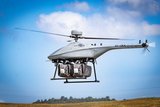
Dynetics will couple uncrewed vehicles with an AI for increased efficiency during air conflicts. (Image: Dynetics)
Dynetics has been selected for the ACE programme, which aims to better inform pilots with group-level situational awareness and coordinated targeting responsibility.


Dynetics, a subsidiary of Leidos, has been selected for Phase 2 of the Air Combat Evolution (ACE) programme, Technical Area 3 (TA3), by DARPA’s Strategic Technology Office.
ACE TA3, also known as AlphaMosaic, seeks to develop and demonstrate a battle management capability driven by AI.
The Phase 2 contract is valued at $2.6 million and has a timeline of 16 months.
Phase 2 will focus on learning how to create a symbiosis between air battle managers and the AI-based battle management system, according to the chief engineer for ACE at Dynamics, Kevin Albarado.
Dynetics will develop a matured approach to battle management, where a single pilot can act as a commander for large-scale, collaborative air warfare.
Phase 1 of the ACE programme focused on AI architecture design for large force battle management in a Mosaic Warfare construct, where the team effectively demonstrated the ability of AI to select air combat forces, plan strategy and execute tactics.
Following a successful Phase 2, Phase 3 would include a realistic, crewed-flight environment involving complex human-machine collaboration.
As recently reported by Shephard, Phase 3 has multiple options relating to different platforms and hardware to be tested.


More from Air Warfare
-
![New US Army UH-60M Black Hawk order bridges uncertain path to MV-75 transition]()
New US Army UH-60M Black Hawk order bridges uncertain path to MV-75 transition
The US$234 million award for 16 Sikorsky UH-60Ms preserves near-term production, but funding uncertainty and an undefinitised contract leave the US Army’s long-term Black Hawk requirements unresolved.
-
![V-22 Osprey safety upgrade moves towards wider fleet installation under $35.5 million deal]()
V-22 Osprey safety upgrade moves towards wider fleet installation under $35.5 million deal
Bell Boeing will supply 73 additional ODSSHI kits as NAVAIR prepares to introduce predictive drive-system monitoring across US and Japanese V-22 fleets.
-
![AFA 2026: US Air Force examines uncrewed cargo aircraft for contested logistics]()
AFA 2026: US Air Force examines uncrewed cargo aircraft for contested logistics
The US Air Force is evaluating demonstrators for uncrewed cargo missions as it considers logistics requirements across the Pacific and other contested environments.
-
![Germany air focus: Europe’s leading near-term air market targets domestic industry]()
Germany air focus: Europe’s leading near-term air market targets domestic industry
Between 2026 and 2032, almost a quarter of EU aircraft spending is expected to come from Germany. While crewed programmes seek modernisation and replacement, uncrewed opportunities look to introduce entirely new capabilities, with both highlighting sovereignty and domestic production.
-
![Europe risks losing control of CUAS production capacity as manufacturers look abroad]()
Europe risks losing control of CUAS production capacity as manufacturers look abroad
European counter-drone developers are securing early orders in the Middle East while slow domestic acquisition processes threaten to redirect production capacity, expertise and investment away from Europe.