Baykar’s Kizilelma drone makes progress with first air-to-air kill
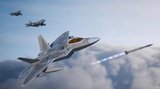
The Kizilelma drone mid-flight with the Gökdoğan missile on its wing station. (Photo: Bayraktar)
This test is the latest milestone achieved by the indigenous drone, destroying a target using a beyond-visual-range missile.


Turkish defence company Baykar’s uncrewed aerial vehicle (UAV) Bayraktar Kizilelma has hit another milestone in its development progress with its first air-to-air missile strike.
The UAV deployed Tubitak Sage’s Gökdoğan air-to-air missile which struck the aircraft target, marked using Aselsan’s MURAD AESA radar. The MURAD radar made its maiden flight with the F-16 Ozgur in 2024 and has also been tested on the Akinci.
This successful test marks the first time an uncrewed fighter jet has destroyed a jet-engine powered aerial target, using a beyond-visual-range (BVR) air-to-air missile, according to Baykar.
The Kizilelma drone also conducted crewed-uncrewed teaming demonstrations over the
Our news & analysis is now part of Defence Insight®
A Basic-level or higher Defence Insight subscription is now required to view this content.



More from Air Warfare
-
![Sophistication versus simplification: the divided future of air-to-air missiles]()
Sophistication versus simplification: the divided future of air-to-air missiles
As global air combat operations continue to evolve at a rate not seen for decades, what will the next generation of air-to-air weapons look like, and what missions will they need to fulfil?
-
![AUSA 2026: New multiwarhead loitering munition enters increasingly competitive market]()
AUSA 2026: New multiwarhead loitering munition enters increasingly competitive market
Heaviside Industries has unveiled its new Tyr loitering munition at AUSA 2026 in Washington, DC, joining a growing field of manufacturers seeking to capitalise on billions of dollars in anticipated military spending.
-
![Middle Eastern demand opens fresh export prospects for Lockheed Martin’s F-35 fighter jet]()
Middle Eastern demand opens fresh export prospects for Lockheed Martin’s F-35 fighter jet
A proposed Saudi Arabian purchase of 48 stealth fighters could signal a broader regional opportunity for the F-35 as European programmes mature.
-
![US military plans multi-UAV trials with Northrop Grumman quantum-navigated Lumberjack]()
US military plans multi-UAV trials with Northrop Grumman quantum-navigated Lumberjack
An undisclosed US military branch is preparing to evaluate multiple Lumberjack Group 3 drones equipped with SandboxAQ’s AQNav magnetic-navigation system. Shephard spoke with Northrop Grumman and SandboxAQ to find out more.
-
![Akinci: How Baykar turned the UAV into an African and Middle Eastern export success]()
Akinci: How Baykar turned the UAV into an African and Middle Eastern export success
From billion-dollar industrial partnerships in the Middle East to rapid military off-the-shelf deliveries in Africa, Baykar has tailored the Akinci to the needs of very different customers. Defence Insight data shows how flexibility, price and Turkish supply-chain independence have helped drive exports.