Bangladesh joins the TB2 club, apparently
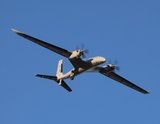
It is reported that Bangladesh is another new customer for the Bayraktar TB2. (Baykar)
Media reports suggest that the Bangladesh military has opted for the hottest UAV on the market at the moment, the Bayraktar TB2.


Bangladesh is believed to be procuring Bayraktar TB2 UCAVs from Turkey, though Dhaka has not yet issued a formal announcement.
Lt Col Abdullah Ibn Zayed, director of the military’s Inter-Services Public Relations branch, acknowledged that the procurement is ‘under process’. However, according to other sources, a deal has already been signed.
For example, in an interview with the Bangladesh newspaper Prothom Alo on 24 July, Mustafa Osman Tufan, the Turkish Ambassador to Bangladesh, said Dhaka had signed a recent purchase agreement for the TB2.
‘The Bangladesh Armed Forces has signed a contract with them for the procurement of the Bayraktar
Our news & analysis is now part of Defence Insight®
A Basic-level or higher Defence Insight subscription is now required to view this content.



More from Air Warfare
-
![AUSA 2026: New multiwarhead loitering munition enters increasingly competitive market]()
AUSA 2026: New multiwarhead loitering munition enters increasingly competitive market
Heaviside Industries has unveiled its new Tyr loitering munition at AUSA 2026 in Washington, DC, joining a growing field of manufacturers seeking to capitalise on billions of dollars in anticipated military spending.
-
![Middle Eastern demand opens fresh export prospects for Lockheed Martin’s F-35 fighter jet]()
Middle Eastern demand opens fresh export prospects for Lockheed Martin’s F-35 fighter jet
A proposed Saudi Arabian purchase of 48 stealth fighters could signal a broader regional opportunity for the F-35 as European programmes mature.
-
![US military plans multi-UAV trials with Northrop Grumman quantum-navigated Lumberjack]()
US military plans multi-UAV trials with Northrop Grumman quantum-navigated Lumberjack
An undisclosed US military branch is preparing to evaluate multiple Lumberjack Group 3 drones equipped with SandboxAQ’s AQNav magnetic-navigation system. Shephard spoke with Northrop Grumman and SandboxAQ to find out more.
-
![Akinci: How Baykar turned the UAV into an African and Middle Eastern export success]()
Akinci: How Baykar turned the UAV into an African and Middle Eastern export success
From billion-dollar industrial partnerships in the Middle East to rapid military off-the-shelf deliveries in Africa, Baykar has tailored the Akinci to the needs of very different customers. Defence Insight data shows how flexibility, price and Turkish supply-chain independence have helped drive exports.