BAE destroys fast-moving UAS with APKWS
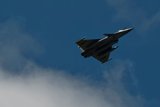
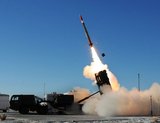
Rendering of an APKWS-guided rocket targeting aerial threats. (Photo: BAE Systems)
BAE Systems has demonstrated the effectiveness of APKWS in targeting agile, high-speed UAS.


Ground-to-air test firings proved the effectiveness of 70mm rockets guided by APKWS guidance kits against Class 2 UAS weighing that can travel at speeds in excess of 100mph.
During a demonstration, five APKWS-guided counter-UAS rockets were fired from a containerised system destroying all targets, including the UAS.
BAE Systems Precision Guidance and Sensing Solutions director Greg Procopio said: ‘Militarised drones are becoming more prevalent in conflicts around the world, and we’re giving our customers an efficient way to counter them without wasting expensive missiles.’
Related Articles
BAE Systems tests APKWS guided rocket kit with new warhead option
BAE said the tests demonstrated APKWS guidance kits’ ability to enable low-cost precision strikes on aerial targets.
To destroy class two UAS, the 70mm rockets combine standard motors and warheads with APKWS guidance kits and proximity or point-detonation fuses.
BAE described the resulting weapon as ‘a low-cost, supersonic, lock-on-after-launch strike weapon with a large 10-pound warhead’ capable of taking out UAS with or without direct contact.
APKWS-guided rockets are effective against soft and armoured targets, whether moving or stationary and can be fired from a range of land and aerial platforms.
Related Equipment in Defence Insight



More from Air Warfare
-
![How India’s FCAS ambitions could reshape its combat-air roadmap]()
How India’s FCAS ambitions could reshape its combat-air roadmap
Participation in the French-led programme could provide India with access to sixth-generation technologies but force difficult choices over AMCA, TEDBF and indigenous propulsion development.
-
![Canada targets 2028 operational debut for AIM-9X and AIM-120D missiles]()
Canada targets 2028 operational debut for AIM-9X and AIM-120D missiles
The missile programmes form part of a broader effort to strengthen Canadian air-combat readiness as the RCAF transitions from the CF-188 to the F-35A and rebuilds its operational weapons stocks.
-
![AIM-260 JATM deal puts Australia’s missile-industrial ambitions in focus]()
AIM-260 JATM deal puts Australia’s missile-industrial ambitions in focus
While a potentially accelerated acquisition timeline could strengthen the RAAF’s long-range air combat capability, Canberra’s continued reliance on US missile production is also put under the spotlight in parallel to its push to build a sovereign industry.
-
![Attack drones versus CUAS – the future of warfare or just another trend?]()
Attack drones versus CUAS – the future of warfare or just another trend?
Demand signals for counter-drone technology are strong and the market is becoming crowded, but is this really the beginning of a new phase of warfare or will commentators be talking about something else 10 years from now?