Avalon 2025: Australia’s missile and ordnance plans excite companies
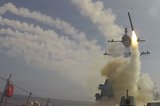
Lockheed Martin, Boeing and BAE Systems have been pushing their case forward for GWEO. (Image: BAE Systems)
Australia’s Guided Weapons and Explosive Ordnance (GWEO) industrial plan is ambitious and promises big spending in an effort to create a local and sovereign capability. Companies at last week’s Australian International Airshow near Melbourne were making their pitches.


After decades of major orders and with ongoing procurements, the opportunities for Australian industry are substantially less than when aircraft orders and deliveries flowed while land and naval competitions were being signed.
The Royal Australian Air Force has received several types of aircraft in recent years and the Australian Army has billions-of-dollars of equipment entering service such as AS9 self-propelled howitzers, AS10 support vehicles for AS9, Abrams main battle tanks and Apache AH-64E attack helicopters.
Similarly, the Royal Australian Navy is awaiting its Hunter-class destroyers and while the AUKUS nuclear submarine requirement is potentially a long-term opportunity there is little
Our news & analysis is now part of Defence Insight®
A Basic-level or higher Defence Insight subscription is now required to view this content.

More from Air Warfare
-
![AI-controlled F-16s advance towards autonomous multi-aircraft operations in US]()
AI-controlled F-16s advance towards autonomous multi-aircraft operations in US
The US plans to progressively expand VENOM/AIR testing from single-aircraft flights to multi-platform autonomous operations over the next 12–24 months, generating data that could support future US military AI programmes, including Collaborative Combat Aircraft.
-
![Canada targets 2028 operational debut for AIM-9X and AIM-120D missiles]()
Canada targets 2028 operational debut for AIM-9X and AIM-120D missiles
The missile programmes form part of a broader effort to strengthen Canadian air-combat readiness as the RCAF transitions from the CF-188 to the F-35A and rebuilds its operational weapons stocks.
-
![AIM-260 JATM deal puts Australia’s missile-industrial ambitions in focus]()
AIM-260 JATM deal puts Australia’s missile-industrial ambitions in focus
While a potentially accelerated acquisition timeline could strengthen the RAAF’s long-range air combat capability, Canberra’s continued reliance on US missile production is also put under the spotlight in parallel to its push to build a sovereign industry.
-
![Attack drones versus CUAS – the future of warfare or just another trend?]()
Attack drones versus CUAS – the future of warfare or just another trend?
Demand signals for counter-drone technology are strong and the market is becoming crowded, but is this really the beginning of a new phase of warfare or will commentators be talking about something else 10 years from now?