Australia reverses decision on Schiebel Camcopters for naval UAVs
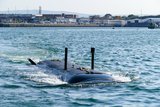
Schiebel’s S-100 Camcopter had been selected for Project Sea 129 Phase 5 Block 1, but the government has reversed the decision. (Photo: ADF)
It turns out that Australia has made absolutely no progress in obtaining shipborne UAVs in the past 18 months or so.


The Royal Australian Navy (RAN) has cancelled its acquisition of Camcopter S-100 shipborne UAVs from Schiebel, which formed Project Sea 129 Phase 5 Block 1.
In typical fashion, the Department of Defence, which is increasingly paranoid about media engagement, has been tightlipped about the reversal.
It only enigmatically said: ‘Sea 129 Phase 5 has not been discontinued. Defence is examining options for the future of Sea 129 Phase 5 as part of its holistic response to the [Defence Strategic Review].’
However, Shephard understands that partners Raytheon Australia and Schiebel were issued a cancellation notice around mid-June.
Neil Hunter, Global
Our news & analysis is now part of Defence Insight®
A Basic-level or higher Defence Insight subscription is now required to view this content.



More from Air Warfare
-
![Saab’s GlobalEye gains ground as Canada’s aircraft procurement tilts towards Europe]()
Saab’s GlobalEye gains ground as Canada’s aircraft procurement tilts towards Europe
Canada’s interest in negotiating a procurement of Saab’s GlobalEye airborne early warning and control aircraft signals its readiness to reduce its reliance on US defence technology as trade tensions with its North American neighbour mount.
-
![South American EW demand balances capability against cost]()
South American EW demand balances capability against cost
South American air forces are weighing advanced electronic warfare capabilities against limited budgets as Peru selects Viper Shield and BAE Systems targets smaller airborne platforms.
-
![September crewed air review: established platforms retain their grip on the market]()
September crewed air review: established platforms retain their grip on the market
With many next-generation capabilities still years from operational readiness, several of the month’s largest developments demonstrated that governments remain willing to invest heavily in aircraft with proven capabilities and established support networks.
-
![Will the US Navy F/A-XX and the USAF F-47 compete for production capacities?]()
Will the US Navy F/A-XX and the USAF F-47 compete for production capacities?
The two sixth-generation fighter programmes could battle for engineering talent and production lines before deliveries begin, testing Boeing’s industrial expansion plans.