Afghanistan welcomes final batch of A-29s


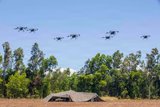
The Afghan Air Force (AAF) has received its final four A-29 Super Tucano turboprop aircraft out of 26 ordered from the US.
‘The AAF now has the capacity to plan and implement operations independently,’ AAF Commander Lt Gen Abdul Fahim Ramin said on 17 September in a ceremony marking the arrival of the aircraft.
According to the Afghanistan MoD, the A-29 fleet is equipped with machine guns, rockets, and laser-guided bombs.
In February 2013, the USAF awarded prime contractor Sierra Nevada a contract to build 20 Super Tucanos, given the US designation A-29, to provide a light air support capability for the AAF. The first was delivered to the USAF in September 2014.
This indefinite-delivery/indefinite-quantity contract was later extended to 26 aircraft. Nine of these are employed by the USAF for training AAF pilots and engineers.
Shephard Defence Insight estimates an out-of-service date of 2039 for the Afghan A-29 fleet.
As part of our promise to deliver comprehensive coverage to our Defence Insight and Premium News subscribers, our curated defence news content provides the latest industry updates, contract awards and programme milestones.
Related Programmes in Defence Insight
Related Equipment in Defence Insight

More from Air Warfare
-
![USAF eyes sensor and weapon upgrades as MH-139A Grey Wolf achieves IOC]()
USAF eyes sensor and weapon upgrades as MH-139A Grey Wolf achieves IOC
The Grey Wolf has entered operational service nearly three years later than originally planned, while new sustainment contracts indicate that some UH-1Ns could remain supported until 2031.
-
![Extending mission readiness: where XR adds real value in pilot, crew and maintenance training]()
Extending mission readiness: where XR adds real value in pilot, crew and maintenance training
Extended reality (XR) is becoming increasingly relevant in military aviation training, adding a flexible layer to an integrated ecosystem spanning the pilot, crew, and maintenance domains.
-
![August crewed air review: KC-390 momentum builds as demand in the tanker market grows]()
August crewed air review: KC-390 momentum builds as demand in the tanker market grows
The KC-390 is building a growing international operator base, but competition in the transport and tanker market is increasingly likely to depend on interoperability, commonality and the strength of supporting ecosystems. Meanwhile, Boeing’s KC-46 and Airbus’s A330 also gained ground in August.