


British Army embraces SlingShot
Add-on kit turns UHF/VHF radio into a BLoS solution to support voice and data communications.


USSF trainees assigned to the 320th Training Squadron at Joint Base San Antonio-Lackland. (Photo: USAF)
The US Space Force (USSF) is seeking to develop a space range to test, train on and evaluate orbital assets.
Speaking to Shephard, Col Peter Flores, commander of Space Training and Readiness Delta (Provisional) (STAR Delta (P)), explained: ‘A space range is really a transitory thing, that for some amount of time, from point A to point B, we will be using a volume of space for some specific activity; and when we’re not using it, it’s just space.’
He added: ‘There’s always a balance between what needs to happen live and what needs to happen in a simulated environment, but
Our news & analysis is now part of Defence Insight®
A Basic-level or higher Defence Insight subscription is now required to view this content.

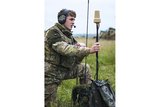
Add-on kit turns UHF/VHF radio into a BLoS solution to support voice and data communications.

The MOESS programme intends to deploy a sovereign Australian tactical electromagnetic sensor capability, installed on a constellation of CubeSats. DEWC is developing a sensor that can conduct radar electronic support in defence-relevant radio frequency bands used by assets such as ships and aircraft.

The US is progressing with its HBTSS project, having overcome an important obstacle.

Plans for Russia to build its own orbital station could enable geospatial intelligence-gathering missions and onboard military experiments away from international observers.

Europe ceded the initiative on reusable launcher technology in 2014 and only now is it trying to claw back the lost ground.

Commercial satellite constellations may find favour with the DoD for low Earth orbit solutions.

Connect with us on socials


