USN claims SSN(X) will be the ‘ultimate apex predator’
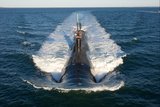
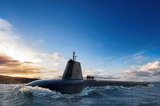
Fast attack submarine USS Seawolf (SSN 21) is submerged after surfacing through the arctic ice. (Photo: USN.)
The USN wants to combine the best capabilities of its Seawolf, Virginia, and Columbia-class submarines as it looks to move ahead with its next-generation SSN(X) attack submarine.


The USN continues to shape its plans to field a new type of attack submarine that RADM Bill Houston, Director of the Office of the Chief of Naval Operations Undersea Warfare Division, has described as the ultimate maritime ‘apex predator’.
Speaking on 21 July during a virtual event ahead of the Navy League Sea-Air-Space conference on 1-4 August, Houston said that the SSN(X) design would be timed to enter production as work on Columbia-class ballistic missile submarines ramps down.
Houston added: ‘We are looking at the ultimate apex predator for the maritime domain; it is going to be faster, carry
Our news & analysis is now part of Defence Insight®
A Basic-level or higher Defence Insight subscription is now required to view this content.

More from Naval Warfare
-
![Rheinmetall’s GMF 140: Ambitious frigate or market misfit?]()
Rheinmetall’s GMF 140: Ambitious frigate or market misfit?
Rheinmetall has unveiled its first next-generation frigate design, showing ambitions to compete as a surface combatant prime contractor. While the company is targeting North America, analysts believe the concept may be better positioned for future European programmes.
-
![US Navy $76.6bn award provides stability for submarine production]()
US Navy $76.6bn award provides stability for submarine production
The US Department of War’s US$76.6 billion Columbia-and Virginia-class submarine contract gives industry demand certainty as Washington seeks to rebuild its shipbuilding base.
-
![US Navy begins SPY-6(V)4 radar testing ahead of first Arleigh Burke destroyer backfit]()
US Navy begins SPY-6(V)4 radar testing ahead of first Arleigh Burke destroyer backfit
Wallops Island trials will validate the next-generation radar's combat system integration before its installation aboard USS Pinckney, the first Flight IIA destroyer to receive the SPY-6(V)4 upgrade.
-
![Hanwha Ocean deepens US ties and eyes Saudi submarine prospect after Canada setback]()
Hanwha Ocean deepens US ties and eyes Saudi submarine prospect after Canada setback
Hanwha Ocean is deepening ties with the US and eyeing a submarine opportunity in Saudi Arabia, as South Korea looks to convert its Canadian defeat into export momentum.
-
![A400M trial demonstrates airborne deployment of uncrewed surface vessel]()
A400M trial demonstrates airborne deployment of uncrewed surface vessel
Kraken Technology Group’s A400M airdrop of a K3 Scout uncrewed surface vessel points to a new way for navies to insert USVs into contested waters, bypassing ports and motherships.