


Suppliers await next step in Australia’s mine warfare transition
Australia’s mine countermeasure capability remains in flux as the Huon-class nears retirement, but accelerated investment in autonomous systems is opening a path for industry.


Example of an AN/USC-61(C) Digital Modular Radio. (Photo: General Dynamics Mission Systems)
General Dynamics Mission Systems has received a $49.89 million modification to an existing IDIQ contract to manufacture, test and deliver AN/USC-61(C) Digital Modular Radio (DMR) systems for the USN.
General Dynamics will also provide High Frequency Distribution Amplifier Group components and engineering services.
DMR is a modular, software reprogrammable radio system with embedded cryptography that provides all RF-to-baseband and baseband-to-RF conversion functions required for USN LoS, BLoS and SATCOM systems.
Naval Information Warfare Systems Command awarded the modification to ‘allow for the execution of emergent requirements that were not anticipated at the onset of the contract’, the DoD noted on 28 March.
It added: ‘Specifically, this action will allow the government to continue procuring hardware and services that fill an unanticipated need, within the scope of the contract but exceeding the originally estimated quantities.’
The modification raises the ceiling of the DMR IDIQ contract to $235.98 million.
Work will be performed in Scottsdale, Arizona, for completion in December 2022.

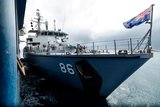
Australia’s mine countermeasure capability remains in flux as the Huon-class nears retirement, but accelerated investment in autonomous systems is opening a path for industry.
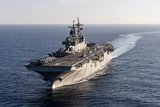
As the Iran War draws US ships and marine corps units away from the Indo-Pacific, curtailed exercises and a temporary carrier gap are exposing tensions between Washington’s demand for more self-reliant allies and the joint training needed to realise that ambition.
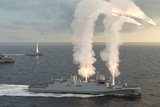
With Canada committed to its River-class replacement and the USN pursuing a lower-cost frigate, Rheinmetall will need to demonstrate where the GMF 140 can fill a capability gap in the North American fleet.

Australian businesses can now bid to support Virginia-class submarine sustainment in Western Australia, as momentum around the Henderson Defence Precinct also builds.
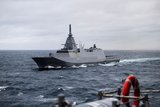
Washington’s search for a foreign-built frigate could hand South Korea, Japan and Turkey a larger prize than a double-hull order: a foothold inside the US shipbuilding industrial base.
Japan’s FY2027 defence budget backs stand-off strike, a 17-aircraft MQ-9B buy and a declared bid to lead the world in uncrewed maritime assets, alongside new frigates, submarines and support ships.

Connect with us on socials


