UDT 2022 heads to the Grey Zone (Sponsored)
In June, the underwater defence technology community heads to Rotterdam for UDT 2022 to explore aspects of underwater defence and security that are of increasing importance to naval forces and governments worldwide, under the theme of ‘the Grey Zone: Undersea Technologies to Protect Maritime Trade, Operations & Infrastructure’.


This article is brought to you by UDT.
UDT 2022 offers visitors the chance to consider the effects of Grey Zone warfare on the defence of Europe’s underwater environment amid deteriorating geopolitical environments and the proliferation of maritime threats. From threats to vulnerable subsea communication cables and energy pipelines, to the push to progress comprehensive subsea warfare systems, develop submarine capabilities and define the politics of security in undersea activity - defence of the underwater domain is a key concern for military forces the world over.
Grey Zone conflicts are the hardest conflicts to prepare for and to pre-empt. Attacks and challenges within the Grey Zone can take many forms, and are typically executed in such a way and using such technology (see: off-the-shelf underwater drones) that enables plausible deniability at the government level. If planned and executed well, these attacks can avoid categorical attribution and military reprisal. At the same time, they can potentially fuel instability, expose vulnerabilities and contribute significantly to the long-term strategic goals of the aggressor.
The Grey Zone’s complexity, ambiguity and importance has been widely recognised by military planners and governments, and it seems probable that many future political and military objectives will only be achieved in or near the grey zone. As a result, it is inevitable that governments and military forces will seek to obtain and/or retain control of this vital area.
UDT 2022 will continue its 34-year tradition of being at the leading-edge of thought leadership in the underwater domain, equipping nations with the latest tools to tackle defence issues in some of the harshest environments known to humans.
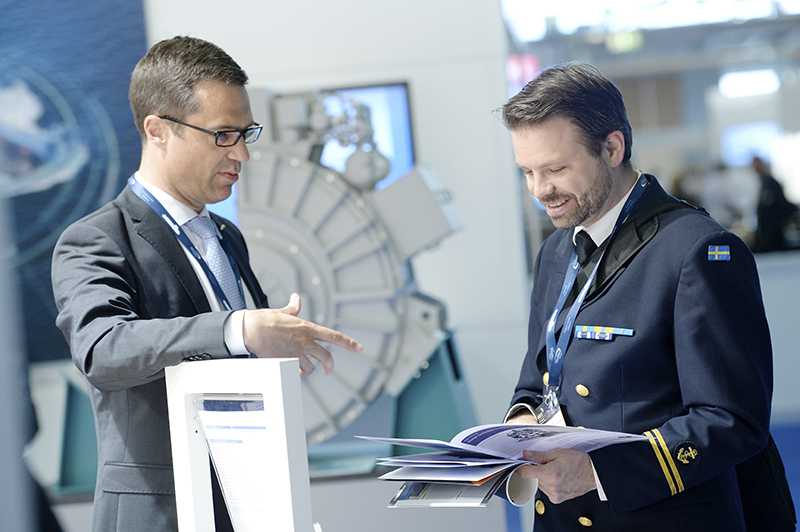
Day One of the conference will begin with a keynote address and panel discussion led by Jerome Gormley, Director for Undersea Business Development - General Atomics. The day’s sessions will cover topics including Sensors & Processing, Platform Design, Uncrewed, Remotely Piloted & Autonomous Systems, and Operational Drivers & Imperatives.
Notable sessions include the ‘Future MCM in combination with old fashioned MCM’ chaired by Dr Alain Maguer, Engineering and IT Department Head - NATO STO CMRE, and including a presentation from Commander Jonas Forsmark, Policy and Plans Department - Swedish Armed Forces HQ; and ‘Anti-Submarine Warfare - Measures of Performance’ chaired by Captain (Retd) Ivan Stace, Head of Strategic Projects - Submarine Support Engineering, Babcock International Group, and a speech from Wenche Oxholm, Senior Scientist - Norwegian Defence Research Establishment.
The afternoon sessions will include a look at ‘Crew-Machine Teaming-ROV for Submarines’ by Tobias Söderblom, Head of Underwater Materiel Section - Swedish Naval Staff; and ‘Improving Diver-Robot Collaboration’ from Matthew Gleed, Senior Technologist - BAE Systems Submarines and Đula Nađ, Laboratory for Underwater Systems and Technologies - Faculty of Electrical Engineering and Computing, University of Zagreb.
Day two of the conference will consider topics including Sensors & Processing, Platform Design, Uncrewed, Remotely Piloted & Autonomous Systems, and AI & Big Data; with sessions looking at modelling and its real world application, mission planning and optimisation and Large Scale Trials & Experimentation. There will also be a live OCEAN2020 Baltic Sea Trial and a showcase of Digital Twins for Submarines. Showcasing the pioneering developments in sensors and mission planning for the seabed, presenters throughout the day will discuss topics ranging from ‘Passive Array Gain Modelling’ (Jörg Hurka, Senior Systems Engineer - Atlas Elektronik GmbH and Mathieu Colin, Sonar Scientist – TNO) to ‘Would You Trust a Computer with Your Life? Interfacing with Autonomy to Creative Trustworthy Human-Machine Teams in Maritime Defence’ (Simon Colby, Chief Technical Authority - Mine Warfare and Unmanned Systems - BAE Systems and Faye McCabe, Human Interface Technologies team - University of Birmingham).

The Day three agenda will look at the latest Netherlands defence policy, and the investments the 2022 host nation is making in the underwater domain. These investments are across the spectrum of underwater defence with major programmes in the mine countermeasures, ASW frigate, and submarine platforms highlighted in the most recent policy papers.
The day will open with a look at ‘Market drivers of submarine design’ from Matthew Smith, Director of Analysis - Shephard Media, followed by sessions including ‘Directed Energy Weapons for Submarine Defence’ from Aymeric Bonnaud, Deputy CTO for Submarine, Power & Energy - Naval Group and Tim Vickery, Senior Principal Advisor – DSTL; and ‘Penetrating The Impenetrable: A Roadmap To Inserting New Technology Into The Underwater Enterprise’ with insights from Holger Isbrecht, Vice President, Sales - Thyssenkrupp Marine Systems GmbH and Dave Ritchie, Naval Architecture & Weights Engineering Department Manager - BAE Systems Submarines.
The conference will close with sessions on ‘Progress on Torpedo Defence Hard Kill’, ‘Advancements in Submarine Rescue Launch and Recovery, ‘Kinetic Energy Powering UUVs’ and ‘Enabling Undersea Technologies through 5G at Sea’.
Use code SHEPHARD10 to get a 10% discount when you register under industry to attend the event: https://www.udt-global.com/shephard-media-2022

More from Industry Spotlights
-
![How joint ventures are expanding Rheinmetall's munitions portfolio (video)]()
How joint ventures are expanding Rheinmetall's munitions portfolio (video)
Roman Köhne, CEO of Rheinmetall's Weapon and Ammunition Division, discusses the company's announcements at Eurosatory 2026, including developments in defence technology, precision systems, industrial partnerships and future capability programmes.
-
![From systems integrator to multi-domain solutions provider (video)]()
From systems integrator to multi-domain solutions provider (video)
Philipp von Brandenstein, Head of Corporate Communications at Rheinmetall, explains how Eurosatory 2026 marked a new stage in the company's evolution.
-
![Maximise survivability with advanced electronic warfare (video)]()
Maximise survivability with advanced electronic warfare (video)
BAE Systems’ all-digital EW delivers 360-degree threat awareness in contested environments, boosts survivability, and cuts lifecycle costs.
-
![“Timelines are measured in seconds”: tackling the UAS threat with dispersed defences]()
“Timelines are measured in seconds”: tackling the UAS threat with dispersed defences
Small uncrewed aerial systems (UAS) have transformed the battlespace, posing a complex threat across all domains. Militaries now need counter-UAS (CUAS) capabilities that defeat the danger while meeting demands around readiness, manoeuvrability and adaptability, according to Mike Spina, Director, Global Sales and Business Development for Targeting and Sensor Systems (TSS) at L3Harris Technologies.
-
![“No single technology is enough”: why an integrated approach to uncrewed warfare is essential]()
“No single technology is enough”: why an integrated approach to uncrewed warfare is essential
In Conversation… Ahmet Akyol, CEO of ASELSAN, talks to Shephard’s Gerrard Cowan about how the rapid evolution of uncrewed aerial systems (UAS) is transforming the battlespace, with militaries focused on both deploying these platforms to maximum effect and developing the defensive systems needed to counter them.
-
![Proteus: Forging the future of autonomous rotorcraft]()
Proteus: Forging the future of autonomous rotorcraft
As the home of British helicopters, Leonardo has worked with the UK Ministry of Defence for over a decade to advance technologies underpinning uncrewed rotorcraft. Today, in partnership with UK Defence Innovation and the Royal Navy, Leonardo is spearheading the next step in that journey: from remotely piloted technologies to fully autonomous systems.