Thyssenkrupp Marine Systems completes Israeli Sa’ar 6 order
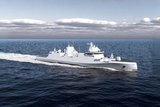
The Sa'ar-class corvettes are a series of four new warships currently being built to conduct patrol duties in Israel's EEZ. (Photo: Thyssenkrupp Marine Systems)
Israel has received the final two Sa’ar 6-class vessels, out of an order of four, from Thyssenkrupp Marine Systems.


Thyssenkrupp Marine Systems has completed the delivery of two ships, the INS Atzmaut and the INS Nitzachon, to the Israeli Navy.
This delivery is the last part of a larger order of four ships that was signed in May 2015, the first two ships were delivered in November 2020 and May 2021 respectively.
Shephard Defence Insight reports the four vessels had a reported cost of $522million in 2015, the equivalent of $568million in 2020 for the construction of the ships alone.
The total cost of the acquisition of the four ships for Israel is estimated at $3billion.
The Sa’ar 6-class vessels will form the backbone of the Israeli Navy for the next 30 years. They are intended to replace the Sa’ar 5 class, offering enhanced attack capabilities.
The ships will be equipped with radar and weapon systems by the Israeli Navy after their arrival in their homeport.
The vessels have a length of 90m, a beam of 13m and a displacement (full load) of 1,900t.
It is likely that the Sa’ar 6 class will be deployed to protect Israel’s key maritime gas fields, such as its newest called Leviathan, which began domestic deliveries in 2019 and exports the month after.
Related Equipment in Defence Insight



More from Naval Warfare
-
![Rheinmetall’s GMF 140: Ambitious frigate or market misfit?]()
Rheinmetall’s GMF 140: Ambitious frigate or market misfit?
Rheinmetall has unveiled its first next-generation frigate design, showing ambitions to compete as a surface combatant prime contractor. While the company is targeting North America, analysts believe the concept may be better positioned for future European programmes.
-
![US Navy $76.6bn award provides stability for submarine production]()
US Navy $76.6bn award provides stability for submarine production
The US Department of War’s US$76.6 billion Columbia-and Virginia-class submarine contract gives industry demand certainty as Washington seeks to rebuild its shipbuilding base.
-
![Dreadnought Phase 4 opens £2.5 billion supply chain opportunity]()
Dreadnought Phase 4 opens £2.5 billion supply chain opportunity
The UK government’s £8.4 billion Dreadnought Phase 4 investment sets aside £2.5 billion for the wider submarine supply chain, opening new work beyond BAE Systems’ prime contract.
-
![Hanwha Ocean deepens US ties and eyes Saudi submarine prospect after Canada setback]()
Hanwha Ocean deepens US ties and eyes Saudi submarine prospect after Canada setback
Hanwha Ocean is deepening ties with the US and eyeing a submarine opportunity in Saudi Arabia, as South Korea looks to convert its Canadian defeat into export momentum.
-
![A400M trial demonstrates airborne deployment of uncrewed surface vessel]()
A400M trial demonstrates airborne deployment of uncrewed surface vessel
Kraken Technology Group’s A400M airdrop of a K3 Scout uncrewed surface vessel points to a new way for navies to insert USVs into contested waters, bypassing ports and motherships.