US Coast Guard commissions first icebreaker acquired in the last 25 years
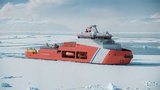
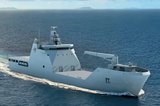
Cutter Storis is the newest Coast Guard icebreaker. (Photo: Edison Chouest Offshore)
The Cutter Storis officially entered service with the Branch on 10 August. The new capability will be operated from Juneau, Alaska.


The US Coast Guard (USCG) conducted the commissioning ceremony of the Cutter Storis on 10 August. Previously known as motor vessel Aiviq, the 360-foot polar class 3-equivalent icebreaker was acquired from an Edison Chouest Offshore subsidiary.
The vessel will be homeported in Juneau, Alaska, and is the first extreme cold weather capability the branch has afforded to purchase in the last 25 years.
Adm Kevin Lunday, acting Commandant of the USCG, claimed at the event that it was the “first of the next generation of polar icebreakers” to be procured by the country to strengthen its “ability to defend the
Already have an account? Log in
Want to keep reading this article?

More from Naval Warfare
-
![Turkey targets Italian market with strategic partnership on USVs and hybrid platforms]()
Turkey targets Italian market with strategic partnership on USVs and hybrid platforms
Havelsan, VN Maritime and Piloda Defence will collaborate to develop and integrate a range of maritime solutions with a view to secure a first procurement contract in Italy in the first half of this year.
-
![Could Asia and the Middle East offer growth opportunities for Italy’s Fincantieri?]()
Could Asia and the Middle East offer growth opportunities for Italy’s Fincantieri?
Export campaigns for Fincantieri’s submarines and frigates are central to the company’s ambitions as billions of dollars in unawarded contracts come into focus.
-
![US Coast Guard’s Arctic Security Cutter ramp-up signifies turning point in Polar operations]()
US Coast Guard’s Arctic Security Cutter ramp-up signifies turning point in Polar operations
The USCG recently announced the award of a contract to Davie Defense for the supply of five ASCs, marking a major step in the acquisition programme as the US grows its presence in the Arctic.