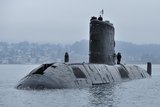
UPDATED: The three boats in the running to be the Netherlands’ next submarine
Over the next decade, the Netherlands' submarine force will drop to two boats as the country retires ageing Walrus-class vessels (HNLMS Walrus pictured) and develop a successor class. (Photo: USN)
Three European shipyards remain in contention to build four new submarines for the Royal Netherlands Navy.


The Netherlands, on 16 November, requested quotes from three shipbuilders - Saab Kockums, Naval Group and ThyssenKrupp Marine Systems (TKMS) - furthering its plans to buy a replacement for its Walrus-class boats.
The three companies are expected to submit bids in the summer of 2023, after which the Dutch MoD will analyse the offerings and select a yard to build the new boats.
The RfQ is a significant step forward for the programme. However, post-contract award, the Netherlands expects it will take around a decade before the first two submarines enter operations.
Two of the four in-service Walrus-class boats
Our news & analysis is now part of Defence Insight®
A Basic-level or higher Defence Insight subscription is now required to view this content.


More from Naval Warfare
-
![US Navy begins SPY-6(V)4 radar testing ahead of first Arleigh Burke destroyer backfit]()
US Navy begins SPY-6(V)4 radar testing ahead of first Arleigh Burke destroyer backfit
Wallops Island trials will validate the next-generation radar's combat system integration before its installation aboard USS Pinckney, the first Flight IIA destroyer to receive the SPY-6(V)4 upgrade.
-
![A400M trial demonstrates airborne deployment of uncrewed surface vessel]()
A400M trial demonstrates airborne deployment of uncrewed surface vessel
Kraken Technology Group’s A400M airdrop of a K3 Scout uncrewed surface vessel points to a new way for navies to insert USVs into contested waters, bypassing ports and motherships.
-
![Babcock onshores 85% of Canada’s submarine supply chain as it eyes future CPSP programme]()
Babcock onshores 85% of Canada’s submarine supply chain as it eyes future CPSP programme
By moving most of the Royal Canadian Navy’s submarine supply chain into Canada, Babcock Canada is driving to strengthen sovereign sustainment capabilities while preparing to compete to maintain the future Canadian Patrol Submarine Project.