Sweden’s FMV selects iXblue’s Quadrans navigation system


The Swedish Defence Material Administration (FMV) has signed a contract with iXblue for 172 Fibre-Optic Gyroscope (FOG) based Quadrans gyrocompasses for a fleet of high-speed crafts.
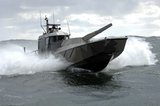
The gyrocompasses will be delivered between 2020-2024 and will be installed on the Royal Swedish Navy’s CB90 combat boats (pictured).
David Cunningham, Commercial Director at iXblue, said: ‘Our FOG technology having no moving parts and offering exceptional reliability was identified as an ideal solution to keep maintenance costs down… the FMV was familiar with the high-performance delivered by our systems and knew the Quadrans met the specific requirements needed for the CB90’.
The Quadrans are solid-state and strap-down systems which provide heading and attitude data suited for high speeds and operation in challenging environments such as GNSS denied positions. Their open architecture ensures seamless interfacing with all major GNSS systems and third-party navigation software.
As part of our promise to deliver comprehensive coverage to Premium News subscribers, our curated defence news content provides the latest industry updates, contract awards and programme milestones.
Related Equipment in Defence Insight

You may also like

More from Naval Warfare
-
![From REPMUS to procurement: the four capabilities NATO navies want from USVs]()
From REPMUS to procurement: the four capabilities NATO navies want from USVs
Syos Aerospace will channel its first outside capital into research, production and overseas reach as navies seek jam-resistant, integrated uncrewed fleets.
-
![Patria NEMO Navy: Unlocking unmatched versatility and protection for modern naval forces]()
Patria NEMO Navy: Unlocking unmatched versatility and protection for modern naval forces
The Patria NEMO Navy mortar system marks a revolutionary advance in maritime defence technology, offering unparalleled benefits to customers who demand performance, adaptability and safety in their naval operations.
-
![Canada targets 2027 frigate trials for CU179 Peregrine uncrewed helicopter]()
Canada targets 2027 frigate trials for CU179 Peregrine uncrewed helicopter
The Royal Canadian Navy’s CU179 Peregrine will undergo Halifax-class frigate trials in 2027 ahead of initial operational capability in 2028, while River-class destroyer integration arrangements remain undefined.
-
![Argentina’s submarine and frigate acquisitions resurface with $3.5bn funding plan]()
Argentina’s submarine and frigate acquisitions resurface with $3.5bn funding plan
Buenos Aires set out foreign loans worth $3.5 billion in its draft 2027 budget, opening a contest in which Naval Group and TKMS could lead the field.
-
![AUKUS heavyweight torpedo test raises questions over future armed UUV requirements]()
AUKUS heavyweight torpedo test raises questions over future armed UUV requirements
A heavyweight torpedo firing from the Royal Navy’s uncrewed submarine XV Excalibur suggests a shift beyond surveillance, with allied navies eyeing strike roles for large autonomous undersea vessels.
-
![Industrial teams prepare roadmap for Indonesia aircraft carrier transformation]()
Industrial teams prepare roadmap for Indonesia aircraft carrier transformation
Fincantieri and PT PAL have agreed on a framework to modernise the former Giuseppe Garibaldi, with drones, communications and broader Italian–Indonesian industrial ties involved.