How the UK Royal Navy is powering up its hybrid fleet to combat new threats
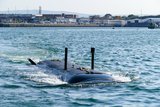
The Royal Navy carried out a USV operational demonstration in October with five uncrewed, remotely operated boats. (Photo: Crown Copyright/LPhot Daniel Bladen)
Since it announced its move towards a new “hybrid navy” earlier this year, the force has announced a number of new uncrewed technologies in the works.


The UK Royal Navy (RN) has visibly ramped up its efforts to enhance its uncrewed capabilities at sea in recent months, demonstrating its ambitions to develop a hybrid fleet to keep the country’s maritime defences on a global footing, despite the service’s relatively small size.
While the RN is already considered a technologically advanced force internationally, its current focus on getting uncrewed underwater vessels (UUVs) and uncrewed surface vessels (USV) into the field as quickly as possible is underpinning its ability to both tackle emerging threats and to work more closely with its allies, particularly within NATO, who are advancing their own uncrewed
Our news & analysis is now part of Defence Insight®
A Basic-level or higher Defence Insight subscription is now required to view this content.

More from Naval Warfare
-
![Competitive P17B tender marks a shift in Indian Navy frigate procurement]()
Competitive P17B tender marks a shift in Indian Navy frigate procurement
The Indian Navy's P17B programme is expected to combine greater weapons capacity with a competitive domestic construction model, although key systems could remain dependent on international supply chains.
-
![How France’s SNLE 3G programme is reshaping the naval nuclear industrial base]()
How France’s SNLE 3G programme is reshaping the naval nuclear industrial base
Extending far beyond a four-submarine replacement programme, France’s ballistic missile submarine effort is a decades-long industrial initiative designed to preserve the country’s ability to build and sustain nuclear-powered strategic platforms.
-
![Quantum Systems enters maritime domain with Baltic-focused USV and UUV]()
Quantum Systems enters maritime domain with Baltic-focused USV and UUV
Quantum Systems has launched into the maritime domain with Seavex and Subvex, aiming to close a Baltic Sea ISR gap opened by infrastructure sabotage.