Indo Pacific 2025: Autonomous systems reigned but can the Australian Defence Force afford it?
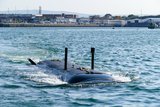
SubSea Craft (SSC) and Australian company Greenroom Robotics signed a teaming agreement at Indo Pacific involving SSC’s MARS USV, pictured. (Photo: SubSea Craft)
Multiple autonomous systems and technologies were on display at this year’s Indo Pacific, but questions remain over how the Australian Department of Defence will balance the books.


A great deal of the Australian Defence Force’s (ADF) budget is being spent on Australia’s Hunter-class frigate and nuclear-powered submarine programmes, but the force continues to pursue short-term autonomy and counter-uncrewed vehicle capabilities in line with its AUKUS commitments.
At Indo Pacific 2025 in Sydney, exhibitors demonstrated an aspiration to reduce the vulnerability of human crew members afloat, achieve attritable mass quickly and greatly extend the ADF’s strike range. Before next year’s federal budget in May, the Australian Department of Defence (Defence) expects to release an update of its National Defence Strategy (NDS) and industry is hoping for more money to deal with
Our news & analysis is now part of Defence Insight®
A Basic-level or higher Defence Insight subscription is now required to view this content.

More from Naval Warfare
-
![Denmark’s air defence frigate requirement draws growing European competition]()
Denmark’s air defence frigate requirement draws growing European competition
With no formal competition under way, industrial partnerships, production capacity and air defence capability could all shape the programme as Denmark considers how to replace its three Iver Huitfeldt-class frigates.
-
![Singapore expands maritime presence with future-ready Sentinel OPV]()
Singapore expands maritime presence with future-ready Sentinel OPV
Singapore is building space for uncrewed systems and future technologies into its new Sentinel-class OPVs, reflecting a wider move towards adaptable vessels capable of maintaining persistent maritime presence.
-
![Israeli Navy looks to expand as war reshapes future force requirements]()
Israeli Navy looks to expand as war reshapes future force requirements
Israel’s navy is preparing for a larger and more technically diverse role, but its ambitions could be impacted by supply chain restrictions, accelerating demand for domestic naval production as well as autonomous maritime capabilities.