Saab receives FMV torpedo development order
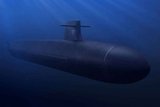
Saab has received orders from the Swedish Defence Materiel Administration (FMV) that will see the company continue development of the new lightweight torpedo, and maintain the Hydra sonar system and underwater weapon systems. The orders, worth around $20.8 million, were announced by Saab on 20 February.
These new orders come under the terms of the June 2014 Saab-FMV letter of intent to support the Swedish armed forces’ underwater capabilities for 2015-2024.
Görgen Johansson, head of dynamics, Saab, said: ‘The new lightweight torpedo order represents another important step in developing a new generation underwater weapon, in collaboration with FMV and the Swedish Navy.
‘Based on the proven Torpedo 45, with its outstanding shallow-water anti-submarine warfare capability, the new lightweight torpedo will deliver significant performance improvements to deal with evolving threats in international scenarios.’
The maintenance contracts for underwater weapon systems and the Hydra sonar system cover maintenance and support operations for relevant operational systems.
Agneta Kammeby, head of underwater systems at dynamics, Saab, said: ‘Saab has been responsible for the maintenance of the navy’s underwater weapons for many years. We have now expanded this responsibility to include the Hydra sonar system.’



More from Naval Warfare
-
![Competitive P17B tender marks a shift in Indian Navy frigate procurement]()
Competitive P17B tender marks a shift in Indian Navy frigate procurement
The Indian Navy's P17B programme is expected to combine greater weapons capacity with a competitive domestic construction model, although key systems could remain dependent on international supply chains.
-
![How France’s SNLE 3G programme is reshaping the naval nuclear industrial base]()
How France’s SNLE 3G programme is reshaping the naval nuclear industrial base
Extending far beyond a four-submarine replacement programme, France’s ballistic missile submarine effort is a decades-long industrial initiative designed to preserve the country’s ability to build and sustain nuclear-powered strategic platforms.
-
![Can the US Navy ask Indo-Pacific allies to do more while training with them less?]()
Can the US Navy ask Indo-Pacific allies to do more while training with them less?
As the Iran War draws US ships and marine corps units away from the Indo-Pacific, curtailed exercises and a temporary carrier gap are exposing tensions between Washington’s demand for more self-reliant allies and the joint training needed to realise that ambition.