Saab and Singapore DSTA expand their understanding on undersea defence
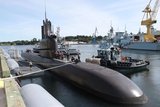
The Saab Sabertooth, one of the company’s existing undersea security and inspection devices. (Picture: Saab)
The organisations have broadened the remit of an existing MoU to help boost underwater defence innovation.


Saab has signed an expanded Memorandum of Understanding (MoU) with Singapore’s Defence Science and Technology Agency (DSTA).
The MoU is intended to help deepen collaboration between the agency and the Swedish firm on the development of underwater defence technologies. The signing of the MoU took place at the Sweden-Singapore Royal Business Forum to mark the first state visit of Sweden to Singapore, on 20 November 2024.
The MoU builds upon a previous agreement signed in 2023, which was focused more on long-term supportability, people development and smart technologies.
Related Articles
Saab unveils Autonomous Ocean Core at Euronaval
Saab said the newly updated scope of the agreement would allow for collaborations specifically on resilient undersea security solutions. The idea behind the Memorandum was that the signatories would go on to conduct joint studies of operational concepts and emerging technologies.
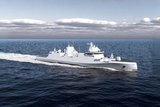
Saab has been expanding its interests in Singapore in recent months. In September 2024, it agreed with the DSTA to build the forward superstructure and the radar mast of the country’s new Multi Role Combat Vessel.
The DSTA has had a busy season when it comes to MoU. Early in November, at Euronaval in Paris, it signed an agreement with French company Safran to develop advanced capabilities against asymmetric defence threats.
At the same event it signed a Programme Agreement with Germany’s Federal Office of Bundeswehr Equipment, Information Technology and In-Service Support (BAAINBw), again with the intention of driving innovation in submarine and undersea defence technologies.
On the newly-expanded scope of the MoU with Saab, Roy Chan, deputy chief executive (operations) at the DSTA, said the collaboration “enables DSTA to push the boundaries of what’s possible in underwater defence technology”.
“Through this expanded MoU, we will build on our existing partnership to co-develop advanced solutions that not only meet evolving security demands but also position Singapore at the forefront of maritime resilience and innovation,” Chan remarked.
Related Programmes in Defence Insight
Multi-Role Combat Vessels (1-6) [Singapore]
Related Equipment in Defence Insight

More from Naval Warfare
-
![Rheinmetall’s GMF 140: Ambitious frigate or market misfit?]()
Rheinmetall’s GMF 140: Ambitious frigate or market misfit?
Rheinmetall has unveiled its first next-generation frigate design, showing ambitions to compete as a surface combatant prime contractor. While the company is targeting North America, analysts believe the concept may be better positioned for future European programmes.
-
![Hanwha Ocean deepens US ties and eyes Saudi submarine prospect after Canada setback]()
Hanwha Ocean deepens US ties and eyes Saudi submarine prospect after Canada setback
Hanwha Ocean is deepening ties with the US and eyeing a submarine opportunity in Saudi Arabia, as South Korea looks to convert its Canadian defeat into export momentum.
-
![A400M trial demonstrates airborne deployment of uncrewed surface vessel]()
A400M trial demonstrates airborne deployment of uncrewed surface vessel
Kraken Technology Group’s A400M airdrop of a K3 Scout uncrewed surface vessel points to a new way for navies to insert USVs into contested waters, bypassing ports and motherships.