


Critical infrastructure protection fuels growth in maritime counter-drone market
Operational lessons are pushing navies towards counter-uncrewed aerial systems at sea, creating a fast-emerging industrial opportunity for radar and effector makers.


Rohde & Schwarz Emirates to deliver external and internal communications for new corvettes of a Gulf navy. (Image: Rohde & Schwarz)
Rohde & Schwarz Emirates have received a contract to provide external and internal communication systems for new corvettes of an unspecified Gulf navy.
They will provide the ships with NAVICS, the high-quality and reliable naval integrated communications system, as well as the external LoS (VHF/UHF) and BLoS (HF) communication solutions it has already provided.
NAVICS is an IP based naval turnkey solution for all classes of ships and its technology is moving away from outdated TDM-based approaches toward IP-based networks.
It provides external and onboard communications and ensures a multilevel security architecture that allows secure, trusted and tamper-proof communications.
All Rohde & Schwarz equipment is in line with the relevant MIL-STDs for naval applications and mission-proven by more than 40 navies.
Although the recipient navy was not specified, Qatar is currently procuring four Al Zubarah-class corvettes, previously known as the Doha class, from the Italian shipbuilder Fincantieri.
The contract for the four vessels was signed in 2016 and the first was delivered last month, in October 2021.


Operational lessons are pushing navies towards counter-uncrewed aerial systems at sea, creating a fast-emerging industrial opportunity for radar and effector makers.

The decision points to deepening NATO cooperation and mounting competition in the Arctic and North Atlantic, as Canada opts for a European-designed solution despite interest from South Korea.
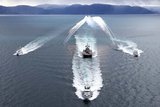
The Royal Navy’s transition towards a hybrid fleet could prove to be less about building more hulls and more about delivering the autonomous technologies, AI and digital integration that will support future maritime operations.

The programme’s structure as a marketplace will allow multiple companies to compete for ongoing procurements; an approach which could be replicated across the Atlantic.

Investment in nuclear submarines, autonomous systems and stronger defensive capabilities for existing vessels show a clear strategic shift in Royal Navy priorities.
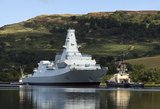
With a revised Defence Investment Plan on the way ahead of the upcoming NATO Summit on 7-8 July, the UK government has begun to reveal more details of how its future naval fleet could look.

Connect with us on socials


