Evolving submarine capabilities enhance Iranian strategic posture


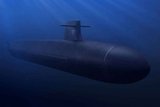
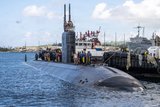
Development and deployment of submarines has been at the forefront of Iranian naval strategy for decades. Since the Islamic Republic of Iran Navy (IRIN) acquired three Kilo-class boats (one of which is pictured above) from Russia in the early 1990s, it has sought to expand this capability in order to better exploit the strategic possibilities offered by the vital links of the Persian Gulf.
Lessons learned during the Iran-Iraq war taught the IRIN and Islamic Revolutionary Guard Corps (IRGC) Navy that conflict against peer competitors would prove prohibitively costly whilst asymmetric tactics offered highly efficient means of delivering strategic
Our news & analysis is now part of Defence Insight®
A Basic-level or higher Defence Insight subscription is now required to view this content.


More from Naval Warfare
-
![How France’s SNLE 3G programme is reshaping the naval nuclear industrial base]()
How France’s SNLE 3G programme is reshaping the naval nuclear industrial base
Extending far beyond a four-submarine replacement programme, France’s ballistic missile submarine effort is a decades-long industrial effort designed to preserve the country’s ability to build and sustain nuclear-powered strategic platforms.
-
![Suppliers await next step in Australia’s mine warfare transition]()
Suppliers await next step in Australia’s mine warfare transition
Australia’s mine countermeasure capability remains in flux as the Huon-class nears retirement, but accelerated investment in autonomous systems is opening a path for industry.
-
![Can the US Navy ask Indo-Pacific allies to do more while training with them less?]()
Can the US Navy ask Indo-Pacific allies to do more while training with them less?
As the Iran War draws US ships and marine corps units away from the Indo-Pacific, curtailed exercises and a temporary carrier gap are exposing tensions between Washington’s demand for more self-reliant allies and the joint training needed to realise that ambition.
-
![How could Rheinmetall’s GMF 140 fit with ongoing programmes in North America?]()
How could Rheinmetall’s GMF 140 fit with ongoing programmes in North America?
With Canada committed to its River-class replacement and the USN pursuing a lower-cost frigate, Rheinmetall will need to demonstrate where the GMF 140 can fill a capability gap in the North American fleet.