OSI to provide German K130 Batch Corvettes with integrated navigation systems
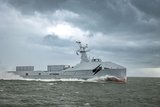
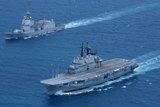
A contract for OSI includes integrated navigation systems for five Braunschweig-class (Type K130) Batch 1 corvettes, plus land-based test and training sites. (Photo: OSI Maritime Systems)
The contract includes upgrades for the navigation systems, radars, WECDIS and various land-based assets.


ARCHE Systeme GmbH (ARCHE) has selected OSI Maritime Systems to provide an integrated navigation system (INS) upgrade to Braunschweig-class (Type K130) Batch 1 corvettes for the German Navy.
The K130 INSs are powered by ECPINS, which will also be installed on the new F126 frigates and forms the core of OSI’s MSC 252(83) IMO type-approved integrated navigation system.
Both the K130 corvettes and the F126 frigates will, therefore, be fully compliant with Edition Three of the NATO Warship Electronic Chart Display & Information System (WECDIS) STANAG 4564.
New navigation radars, WECDIS, navigation workstations and interfacing with existing sensors are included among the upgrade features on the five K130 Batch 1 vessels. The contract covers the corvettes themselves plus land-based test and training sites.
OSI president and CEO Ken Kirkpatrick said in a statement: ‘Once completed, the corvettes will share the same commonality, scalability and ECPINS navigation performance that will be exhibited in the F126 as well as with that of other NATO and Allied customers.’
The ECPINS family consists of versions for surface ships, submarines and high-speed small craft, enabling fleet commonality, interoperability and reduced maintenance and training costs.
Related Equipment in Defence Insight

More from Naval Warfare
-
![Production-ready beats prototype-ready in the US Navy’s MUSV marketplace]()
Production-ready beats prototype-ready in the US Navy’s MUSV marketplace
HII, Saronic and Galliano Marine Services have won US Navy production contracts to supply medium uncrewed surface vessels. The marketplace approach behind them sets the bar for suppliers eyeing allied navy competitions.
-
![Anduril’s $6.6bn wager on fixing America’s submarine bottleneck]()
Anduril’s $6.6bn wager on fixing America’s submarine bottleneck
Anduril’s Arsenal-2 is a gamble on a brand-new yard and perfect timing, but with Virginia-class output stuck at 1.1 to 1.2 boats a year, it is a bet worth making.
-
![From REPMUS to procurement: the four capabilities NATO navies want from USVs]()
From REPMUS to procurement: the four capabilities NATO navies want from USVs
Syos Aerospace will channel its first outside capital into research, production and overseas reach as navies seek jam-resistant, integrated uncrewed fleets.
-
![Canada targets 2027 frigate trials for CU179 Peregrine uncrewed helicopter]()
Canada targets 2027 frigate trials for CU179 Peregrine uncrewed helicopter
The Royal Canadian Navy’s CU179 Peregrine will undergo Halifax-class frigate trials in 2027 ahead of initial operational capability in 2028, while River-class destroyer integration arrangements remain undefined.