OPV utility will have future relevance


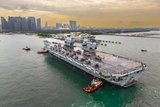
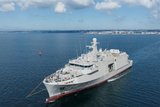
Offshore patrol vessels (OPVs) will be able to play a number of roles in future operations by services like the UK Royal Navy and, together with corvette-sized vessels, offer a faster way to regenerate capability for shrinking fleets.
At present a Royal Navy Batch 1 River-class OPV, HMS Mersey, is deployed to the North Atlantic on counter drug smuggling and defence engagement duties. The vessel recently assisted the Royal Canadian Navy and US Coast Guard in seizing a large shipment of narcotics near Nicaragua.
Meanwhile HMS Clyde, a modified Batch 1 River-class, is forward deployed to the Falkland
Our news & analysis is now part of Defence Insight®
A Basic-level or higher Defence Insight subscription is now required to view this content.

More from Naval Warfare
-
![From the seas to the web: the changing shape of UK defence in Southeast Asia]()
From the seas to the web: the changing shape of UK defence in Southeast Asia
As his final engagement before leaving his post as the head of the British defence staff for Southeast Asia and defence adviser to Singapore, Brigadier Eddie Maskell-Pedersen spoke with Shephard about maritime security, cyber cooperation and long-term partnerships.
-
![Naval primes dive into an underwater acquisition gold rush]()
Naval primes dive into an underwater acquisition gold rush
A cluster of acquisitions by Fincantieri, Thales, Lockheed Martin and Rheinmetall points to a race to secure underwater warfare, autonomy and sensing capability.
-
![Baltic naval priorities shift towards mine warfare and versatile platforms]()
Baltic naval priorities shift towards mine warfare and versatile platforms
Baltic states are investing in mine warfare, uncrewed systems and multirole platforms as major warship purchases remain scarce, industry sources indicate.