Norway to renew naval forces within a decade
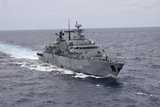
The Fridtjof Nansen-class were built in Spain by Navantia and have been the main surface combatants of the RNoN fleet. Commissioned from 2006–11 they have been deemed insufficient for future operations which will require more multi-domain capabilities and will be replaced. (Photo:RNoN)
The Royal Norwegian Navy (RNoN) will be almost completely overhauled and replaced with new ships and submarines in a timeframe of about 10 years.


The launch of the Norway’s Long Term Defence Plan (LTDP) 2025–36 has seen the Scandinavian country announce plans to introduce new warships and surface ships to enhance the capability of the RNoN.
These plans include the introduction of at least five new anti-submarine warfare (ASW) frigates built under ‘strategic cooperation’ with a close ally along with new ASW helicopters that will operate from them. There will be an option for a sixth.
The RNoN will also receive 28 new ‘Standardised Vessels’ in two different classes: 18 medium-sized coastal ships (formerly classified as ‘small’) and 10 large ocean-going ships which will have modular weapons
Our news & analysis is now part of Defence Insight®
A Basic-level or higher Defence Insight subscription is now required to view this content.

More from Naval Warfare
-
![Industry sees opportunity in Australia’s shift to networked undersea warfare]()
Industry sees opportunity in Australia’s shift to networked undersea warfare
Australia’s new defence innovation strategy indicates a shift from platform-centric to network-centric undersea warfare, with Ocius and Anduril Industries pointing to fast-growing opportunities for local industry.
-
![Asia-Pacific emerges as the largest export market for US-made USVs]()
Asia-Pacific emerges as the largest export market for US-made USVs
Asian customers have placed one of the largest known international purchases of US-built uncrewed surface vessels, highlighting accelerating regional demand for autonomous maritime capabilities and distributed naval operations.
-
![RTX confirms US Marine Corps and US Navy acquire Hadalus UUV]()
RTX confirms US Marine Corps and US Navy acquire Hadalus UUV
RTX told Shephard that the Hadalus UUV has been procured by the US Marine Corps and the Office of Naval Research for operational experimentation as the company prepares additional demonstrations with the US Navy, NATO and AUKUS partners.