New deal to make AUKUS cooperation easier
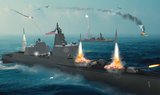
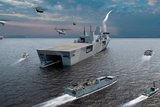
Concept of potential AUKUS SSN. (Image: Crown Copyright)
The AUKUS agreement will support Australia’s purchase of at least eight nuclear-powered submarines under pillar one. Other pillars of the agreement cover high technology such as cyber, unmanned systems, AI, EW, undersea capabilities and information sharing between the three countries.


The US has improved access to its equipment and technology for AUKUS partner countries Australia and the UK by reducing licensing requirements and providing exemptions within export control systems.
On 21 April, the US Commerce Department’s Bureau of Industry and Security (BIS) released an “interim final rule significantly reducing licensing requirements for Australia and the UK to foster defence trade and technological innovation”.
Partner countries welcomed the passage of the FY24 US National Defense Authorization Act, and legislation passed in the Australian and UK parliaments.
A US State Department spokesperson said: “Exemptions in our export control systems, within a framework of shared standards with Australia and the UK, are key to harnessing and maximizing the innovative power residing in our defence industrial bases.
“Industry, research communities and academic institutions should take full advantage of this innovation-spurring ecosystem.”
The agreement will be expected to be finalised over the next four months.
The reforms will make it easier for public and private sector security institutions to create a more integrated defence industrial base and identify new opportunities for trilateral capability development.
In a separate statement, the UK MoD said the agreement would significantly reduce licensing requirements for both “the UK and Australia and enable the closest possible collaboration between our scientists and engineers and our defence industries as a sector”.
Related Programmes in Defence Insight
Related Equipment in Defence Insight


More from Naval Warfare
-
![US Navy’s $275 billion BBGN plan hinges on shipyard transformation]()
US Navy’s $275 billion BBGN plan hinges on shipyard transformation
The US Navy’s planned nuclear-powered warship carries a US$275 billion price tag, but the greater story lies in the industrial overhaul needed to build it, from AI-enabled design to digital twins and modular construction.
-
![Asia-Pacific emerges as the largest export market for US-made USVs]()
Asia-Pacific emerges as the largest export market for US-made USVs
Asian customers have placed one of the largest known international purchases of US-built uncrewed surface vessels, highlighting accelerating regional demand for autonomous maritime capabilities and distributed naval operations.
-
![Europe’s naval contractors benefit from growing refit and upgrade demand]()
Europe’s naval contractors benefit from growing refit and upgrade demand
Rheinmetall’s order to modernise the German Navy frigate Bayern points to a wider European shift towards extending warship service life as new-build programmes face delay.
-
![The UK joins the movement towards joint procurement]()
The UK joins the movement towards joint procurement
The UK will spend an estimated US$3.89 billion over the next decade in joint naval programmes, a lot of which will be in cooperation with Norway.