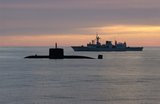
Naval Group remains focused on Central Europe


French naval shipbuilder Naval Group continues to pursue export opportunities, eyeing Central Europe as one of the most promising markets.
Naval Group gives a lot of attention to its business activities in Central Europe, carefully following procurement programmes in countries such as Bulgaria, Poland and Romania.
'For the past ten years we've been working in these countries to promote our wide range of products. Two main segments of activities are surface ships, with corvettes and frigates and submarines' said François Dupont, Director of International Trade Department at Naval Group.
In Bulgaria Naval Group is particularly interested in the troubled procurement
Already have an account? Log in
Want to keep reading this article?

You may also like
More from Naval Warfare
-
![Australia is ramping up its uncrewed surface fleet as Sea Archer lines up for key requirement]()
Australia is ramping up its uncrewed surface fleet as Sea Archer lines up for key requirement
As advances in uncrewed technology increasingly shape Australia’s maritime future, Shephard spoke with the country’s head of navy capability and a Leidos Australia executive about the operational advantages behind the shift.
-
![What does Saab’s operations shake-up mean for its new ‘Naval’ chapter?]()
What does Saab’s operations shake-up mean for its new ‘Naval’ chapter?
Saab’s merger of its Kockums and Naval Combat Systems divisions into a single business area called Naval, effective 1 April 2026, aims to enhance efficiency, innovation and competitive positioning in the naval sector.
-
![Iran and the future of amphibious operations: crewed and uncrewed solutions]()
Iran and the future of amphibious operations: crewed and uncrewed solutions
Amphibious operations are a very unique type of military operation, and global defence industries are developing new solutions to enhance capabilities and efficiency.
-
![US Navy to acquire and test uncrewed surface vessel prototypes by the end of FY2026]()
US Navy to acquire and test uncrewed surface vessel prototypes by the end of FY2026
The new autonomous surface vessels are planned to be operationally fielded in FY2027, following the completion of on-water trials.
-
![Hanwha Ocean and TKMS are firming up their Canadian next-gen submarine proposals]()
Hanwha Ocean and TKMS are firming up their Canadian next-gen submarine proposals
CPSP competitors are proposing platforms fitted with advanced, next-generation capabilities to be built and sustained in cooperation with the Canadian industry.