Hanwha Ocean and TKMS are firming up their Canadian next-gen submarine proposals
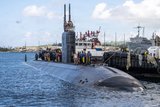
Victoria-class HMCS Windsor submarine sails along with HMCS Montreal. (Photo: Canadian DND)
CPSP competitors are proposing platforms fitted with advanced, next-generation capabilities to be built and sustained in cooperation with the Canadian industry.


The two competitors for the Canadian Patrol Submarine Project (CPSP) – South Korean Hanwha Ocean and German Thyssen Krupp Marine Systems (TKMS) – are proposing next-generation capabilities designed to offer stealth, provide target detection and enable long periods of underwater operation.
Both shipbuilders have also been sealing partnerships with local contractors to ensure national service support and supply chain for the future conventional/attack platforms over their service life.
Hanwha Ocean’s offer includes a design based on the Dosan Ahn Chang-Ho Class KSS-III. TKMS, in turn, is proposing the HDW Class 212 Common Design (212CD).
The KSS-III is the same class of submarine actively
Our news & analysis is now part of Defence Insight®
A Basic-level or higher Defence Insight subscription is now required to view this content.

More from Naval Warfare
-
![Competitive P17B tender marks a shift in Indian Navy frigate procurement]()
Competitive P17B tender marks a shift in Indian Navy frigate procurement
The Indian Navy's P17B programme is expected to combine greater weapons capacity with a competitive domestic construction model, although key systems could remain dependent on international supply chains.
-
![China’s mineral processing dominance exposes naval supply chain vulnerabilities]()
China’s mineral processing dominance exposes naval supply chain vulnerabilities
Competition for critical minerals, and China’s dominance of their processing, is emerging as a decisive factor in future naval procurement programmes.
-
![Suppliers await next step in Australia’s mine warfare transition]()
Suppliers await next step in Australia’s mine warfare transition
Australia’s mine countermeasure capability remains in flux as the Huon-class nears retirement, but accelerated investment in autonomous systems is opening a path for industry.