China’s mineral processing dominance exposes naval supply chain vulnerabilities
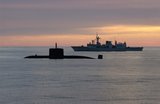
A Los Angeles-class submarine. Submarines depend on a range of critical minerals and rare earth elements. (Photo: US Navy)
Competition for critical minerals, and China’s dominance of their processing, is emerging as a decisive factor in future naval procurement programmes.


While competition for critical minerals has long since been a factor in naval and wider defence procurement, China’s continued dominance of the processing stage of these supply chains has created a risk for Western fleets in the event of a confrontation with Beijing.
From missile guidance systems to submarine hulls, naval capabilities are reliant on a set of minerals that China can refine at scale.
At the Thales Tech Summit in London on 14 September 2026, Rupert Pearce, the UK’s National Armaments Director, set out how the UK Ministry of Defence (MoD) was using digital modelling to understand where its
Our news & analysis is now part of Defence Insight®
A Basic-level or higher Defence Insight subscription is now required to view this content.




More from Naval Warfare
-
![Euronaval 2026: Baltic breakthrough powers Saildrone’s next European expansion]()
Euronaval 2026: Baltic breakthrough powers Saildrone’s next European expansion
Denmark’s doubled deployment, Mediterranean smuggling routes and Norwegian composite hulls show where uncrewed surveillance demand is heading, while British funding remains unclear.
-
![Euronaval 2026: by the power of six, Fincantieri’s MMMV reflects modular naval shift]()
Euronaval 2026: by the power of six, Fincantieri’s MMMV reflects modular naval shift
The 50m, six-person ship from the Italian shipbuilder carries swappable, containerised payloads instead of a fixed mission, reflecting a shift that is becoming increasingly evident.
-
![Canada’s submarine availability under pressure as Chicoutimi is unlikely to return to front-line duties]()
Canada’s submarine availability under pressure as Chicoutimi is unlikely to return to front-line duties
HMCS Victoria and HMCS Windsor could return from their current deep maintenance, but unconfirmed operational timelines leave questions over patrol capacity before the first CPSP arrives.