Just the two of us: Babcock and TKMS remain in Miecznik competition
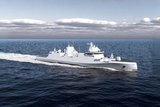
Babcock's Arrowhead 140 frigate design. (Photo: Babcock.)
Poland is looking to acquire three multi-purpose frigates under its Miecznik project.


The Polish government on 10 February announced it has whittled down the number of competitors for the Miecznik frigate programme to the UK’s Babcock and Germany’s ThyssenKrupp Marine Systems (TKMS).
The decision indicates that Spanish shipbuilder Navantia is out of the programme; when asked for comment by Shephard, the company directed questions to PGZ as the prime contractor for Miecznik.
Babcock offered its Arrowhead 140 design, which is also the basis for the future RN Inspiration-class Type 31 vessel, while TKMS proposed the MEKO A-300PL.
Navantia had put forward its F-100PL design.
Following an assessment of lifecycle costs, interoperability with existing Polish equipment, modernisation potential and other metrics, the UK and German bids scored within 5% of each other.
A decision between the two final contenders and a contract signature will depend on final terms and acquisition cost negotiations.
Under a technology transfer programme, the chosen frigate design will be built at the PGZ shipyard in Gdynia.
Related Programmes in Defence Insight

More from Naval Warfare
-
![Rheinmetall’s GMF 140: Ambitious frigate or market misfit?]()
Rheinmetall’s GMF 140: Ambitious frigate or market misfit?
Rheinmetall has unveiled its first next-generation frigate design, showing ambitions to compete as a surface combatant prime contractor. While the company is targeting North America, analysts believe the concept may be better positioned for future European programmes.
-
![US Navy $76.6bn award provides stability for submarine production]()
US Navy $76.6bn award provides stability for submarine production
The US Department of War’s US$76.6 billion Columbia-and Virginia-class submarine contract gives industry demand certainty as Washington seeks to rebuild its shipbuilding base.
-
![US Navy begins SPY-6(V)4 radar testing ahead of first Arleigh Burke destroyer backfit]()
US Navy begins SPY-6(V)4 radar testing ahead of first Arleigh Burke destroyer backfit
Wallops Island trials will validate the next-generation radar's combat system integration before its installation aboard USS Pinckney, the first Flight IIA destroyer to receive the SPY-6(V)4 upgrade.
-
![Hanwha Ocean deepens US ties and eyes Saudi submarine prospect after Canada setback]()
Hanwha Ocean deepens US ties and eyes Saudi submarine prospect after Canada setback
Hanwha Ocean is deepening ties with the US and eyeing a submarine opportunity in Saudi Arabia, as South Korea looks to convert its Canadian defeat into export momentum.
-
![A400M trial demonstrates airborne deployment of uncrewed surface vessel]()
A400M trial demonstrates airborne deployment of uncrewed surface vessel
Kraken Technology Group’s A400M airdrop of a K3 Scout uncrewed surface vessel points to a new way for navies to insert USVs into contested waters, bypassing ports and motherships.