Industrial teams prepare roadmap for Indonesia aircraft carrier transformation
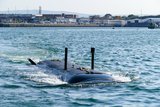
The former Italian Navy aircraft carrier Giuseppe Garibaldi is seen arriving in Indonesia escorted by the newly delivered Brawijaya-class frigates. (Photo: Indonesia Navy)
Fincantieri and PT PAL have agreed on a framework to modernise the former Giuseppe Garibaldi, with drones, communications and broader Italian–Indonesian industrial ties involved.


Indonesia’s newly commissioned aircraft carrier, KRI Sriwijaya, is unsuited to fixed-wing jets, but it can host uncrewed aerial vehicles (UAVs). The gap between what the ship was built to do and what Jakarta wants from it is where the industrial opportunity lies.
A memorandum of understanding (MoU) signed in Jakarta on 24 September gave that opportunity an industrial shape. Fincantieri, the Italian shipbuilder that designed and built the vessel, and PT PAL Indonesia, the country’s state-owned shipbuilder, agreed on a framework for modernising KRI Sriwijaya, which is the former Italian Navy carrier Giuseppe Garibaldi.
Neither company disclosed
Our news & analysis is now part of Defence Insight®
A Basic-level or higher Defence Insight subscription is now required to view this content.



More from Naval Warfare
-
![Denmark’s air defence frigate requirement draws growing European competition]()
Denmark’s air defence frigate requirement draws growing European competition
With no formal competition under way, industrial partnerships, production capacity and air defence capability could all shape the programme as Denmark considers how to replace its three Iver Huitfeldt-class frigates.
-
![Five years on: where could opportunities emerge next for AUKUS Pillar II?]()
Five years on: where could opportunities emerge next for AUKUS Pillar II?
Payload commonality, combat systems and electronic warfare are emerging as likely priorities as the trilateral partnership balances building submarines with sharing industrial ecosystems.
-
![Singapore expands maritime presence with future-ready Sentinel OPV]()
Singapore expands maritime presence with future-ready Sentinel OPV
Singapore is building space for uncrewed systems and future technologies into its new Sentinel-class OPVs, reflecting a wider move towards adaptable vessels capable of maintaining persistent maritime presence.
-
![From the Baltic to the Gulf: where USV procurement is heading next]()
From the Baltic to the Gulf: where USV procurement is heading next
Saildrone’s new Copenhagen base is one sign of a larger shift, as navies globally turn to uncrewed vessels for surveillance and mine clearance.
-
![Israeli Navy looks to expand as war reshapes future force requirements]()
Israeli Navy looks to expand as war reshapes future force requirements
Israel’s navy is preparing for a larger and more technically diverse role, but its ambitions could be impacted by supply chain restrictions, accelerating demand for domestic naval production as well as autonomous maritime capabilities.
-
![Quantum sensing gathers pace as navies eye undersea advantage]()
Quantum sensing gathers pace as navies eye undersea advantage
As AI dominates defence conversations, industry increasingly points to quantum sensing as the technology set to change submarine and uncrewed underwater vehicle operations.