Gulf of Aden hosts USN laser demonstration
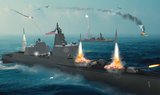
USS Portland conducted a high-energy laser weapon system demonstration on 14 December in the Gulf of Aden by successfully engaging a training target. (Photo: USN/Mass Communication Specialist 2nd Class Devin Kates)
USS Portland successfully test-fired the LWSD Mark 2 MOD 0 laser weapon on 14 December.


The USN amphibious transport dock ship USS Portland conducted a high-energy laser weapon system demonstration on a static surface training target on 14 December.
The Solid State Laser Weapons System Demonstrator (LWSD) Mark 2 MOD 0 test took place while Portland was sailing in the Gulf of Aden.
During the demonstration, the laser weapon aboard Portland successfully engaged the training target, the USN 5th Fleet announced in a 15 December press release.
Portland previously tested the LWSD in May 2020 when it successfully disabled an sUAS in the Pacific Ocean.
The Office of Naval Research in 2018 selected Portland to host the laser weapon technology, which the USN considers as the next-generation capability to the 30kW Laser Weapon System (LaWS) that was tested for three years by USS Ponce (an amphibious transport dock ship, now retired) in the Middle East.
Portland is part of the Essex Amphibious Ready Group that includes the amphibious assault ship USS Essex, the dock landing ship USS Pearl Harbor and embarked Marines from the 11th Marine Expeditionary Unit.


More from Naval Warfare
-
![US turns to allies to tackle navy shipbuilding backlog]()
US turns to allies to tackle navy shipbuilding backlog
A White House memorandum acknowledges US Navy shipbuilding backlogs and a weakened industrial base, opening a formal path for South Korean and Japanese yards to help rebuild capacity.
-
![US Navy’s $275 billion BBGN plan hinges on shipyard transformation]()
US Navy’s $275 billion BBGN plan hinges on shipyard transformation
The US Navy’s planned nuclear-powered warship carries a US$275 billion price tag, but the greater story lies in the industrial overhaul needed to build it, from AI-enabled design to digital twins and modular construction.
-
![Europe’s naval contractors benefit from growing refit and upgrade demand]()
Europe’s naval contractors benefit from growing refit and upgrade demand
Rheinmetall’s order to modernise the German Navy frigate Bayern points to a wider European shift towards extending warship service life as new-build programmes face delay.