


Autonomy gives Turkey a chance to outflank established naval shipbuilders
Turkish shipbuilders have sold ships from Asia to Europe, but autonomy and swarm technology could give them a fairer fight against Western European rivals.


A rendering of an F124 frigate. (Photo: Hensoldt.)
Germany’s Federal Office for Equipment, Information Technology and Use of the Bundeswehr (BAAINBw) has awarded Hensoldt a $258.52 million (€220 million) contract to modernise the F124 air defence frigates’ radars.
Hensoldt, working with Israel Aerospace Industries (IAI), will supply TRS-4D/LR ROT AESA wide-range radars, replacing the in-service SMART-L radars.
An additional radar system will be installed at the German Naval Engineering School in Parow.
Hensoldt said the order marked the start of the development of ‘national capabilities in the field of ballistic missile defence’. Adding the shore facility would allow user training and further developments to be tested on land before onboard installation.
Hensoldt added the strategic cooperation with IAI’s ELTA subsidiary provided Germany with a ‘national partner for certification and long-term support, as well as market-available systems that have been tried and tested in the field’.
BAAINBw said conversion of the ships would begin in 2024, with works due to be completed by 2028.
The contract builds on previous cooperation between Hensoldt and IAI ELTA for the land-based Hughes Air Defence Radar Nachfolgesystem programme. Both projects use similar radars.


Turkish shipbuilders have sold ships from Asia to Europe, but autonomy and swarm technology could give them a fairer fight against Western European rivals.

Ahead of Euronaval 2026, major submarine, frigate and aircraft carrier programmes are driving investment, while future corvette replacements and growing interest in uncrewed vessels offer further opportunities for industry into the 2030s and beyond.

The Canadian Department of National Defence is evaluating communications and reconnaissance changes for CCGS Imnaryuaq’s expanded maritime security role, while retaining its 2032 acceptance target.
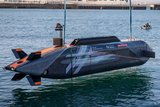
Responses are due by 29 October as the Royal Navy tests the market, with BAE Systems’ Herne and MSubs’ Excalibur setting up a contest where payloads may decide the winner.

Boeing has outlined its upcoming precision-landing and carrier-airspace trials as MQ-25 manufacturing shifts towards Illinois, with initial Lot 1 deliveries expected in 2029.
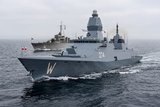
Babcock is taking its Polish industrial partnership approach to Denmark and New Zealand as navies seek sovereign shipbuilding skills alongside ships.

Connect with us on socials


