Choppy waters for LCS


The survivability and lethality of the US Navy’s troubled Littoral Combat Ship (LCS) programme has again been called into question in a GAO report released on 18 December.
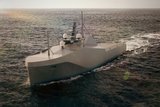
A total of 40 LCS vessels, down from 52, will now be built from one shipyard for the US Navy after an intervention by US Secretary of Defense Ashton Carter. Plans had originally called for 52 vessels in two Freedom and Independence-class variants constructed by Lockheed Martin and Austal USA, while six LCS have been commissioned into service.
Last month Lockheed Martin began work for the US Navy’s fifteenth LCS at
Our news & analysis is now part of Defence Insight®
A Basic-level or higher Defence Insight subscription is now required to view this content.

More from Naval Warfare
-
![Greece’s $8.1 billion naval pipeline signals opportunities beyond frigates]()
Greece’s $8.1 billion naval pipeline signals opportunities beyond frigates
Defence Insight has identified 14 upcoming Greek naval programmes, with submarine replacement, uncrewed systems and longer-term fleet renewal offering potential opportunities for suppliers.
-
![Navantia pitches 64-cell F110 frigate and sets out plans for 75m autonomous vessel]()
Navantia pitches 64-cell F110 frigate and sets out plans for 75m autonomous vessel
With its second F110 frigate launched four months early, the Spanish shipbuilder is courting allied navies with a missile-defence upgrade and a 75m uncrewed vessel.
-
![Chinese maritime militia puts naval surveillance to the test]()
Chinese maritime militia puts naval surveillance to the test
With record deployments in the South China Sea and a newly reported sighting east of Taiwan, China’s maritime militia is putting greater pressure on regional surveillance. How can navies establish what these vessels are doing quickly and reliably enough to respond?
-
![‘Now Europe is a market’: Fincantieri sees new opportunities closer to home]()
‘Now Europe is a market’: Fincantieri sees new opportunities closer to home
Fincantieri naval vessels chief Eugenio Santagata spoke to Shephard about opportunities and how they sit within a portfolio backed by a “strong backlog”, as Euronaval 2026 unfolded.
-
![US Navy weighs “Super Intelligence” role in designing a quieter SSN(X) attack submarine]()
US Navy weighs “Super Intelligence” role in designing a quieter SSN(X) attack submarine
NAVSEA is exploring AI-assisted design for a larger, stealthier submarine with increased weapons capacity and uncrewed-system integration, with lead-boat procurement envisaged from 2040.