France’s first Barracuda-class submarine enters service
Sébastien Lecornu boarding the new Barracuda-class submarine during the commissioning ceremony. (Photo: Sébastien Lecornu Twitter)
French Navy celebrates the first of its new Barracuda-class nuclear submarines entering service.


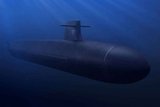
The French Navy’s first Barracuda-class submarine, Suffren, was commissioned into service on Friday 3 June. The ceremony was attended by the new Minister of the Armed Forces, Sébastien Lecornu, who had been appointed to the position in May.
Suffren was handed over to the French Navy in November 2020 to begin its final phase of testing. Now, the vessel has entered service following successful testing.
The Barracuda-class submarines will replace the existing Rubis-class and Amethyste-class and provide France with an enhanced sub-surface attack capability.
According to Shephard Defence Insight, the programme experience significant delays relating to the development of a new nuclear reactor.
Work began on the first-of-class in 2007, however, the submarine was delayed and only launched in July 2019.
The first four vessels are now expected to be commissioned by 2025 and all six by 2030. The unit cost is now thought to be in excess of $2 billion each.
Related Equipment in Defence Insight


More from Naval Warfare
-
![Competitive P17B tender marks a shift in Indian Navy frigate procurement]()
Competitive P17B tender marks a shift in Indian Navy frigate procurement
The Indian Navy's P17B programme is expected to combine greater weapons capacity with a competitive domestic construction model, although key systems could remain dependent on international supply chains.
-
![Quantum Systems enters maritime domain with Baltic-focused USV and UUV]()
Quantum Systems enters maritime domain with Baltic-focused USV and UUV
Quantum Systems has launched into the maritime domain with Seavex and Subvex, aiming to close a Baltic Sea ISR gap opened by infrastructure sabotage.
-
![Suppliers await next step in Australia’s mine warfare transition]()
Suppliers await next step in Australia’s mine warfare transition
Australia’s mine countermeasure capability remains in flux as the Huon-class nears retirement, but accelerated investment in autonomous systems is opening a path for industry.
-
![Can the US Navy ask Indo-Pacific allies to do more while training with them less?]()
Can the US Navy ask Indo-Pacific allies to do more while training with them less?
As the Iran War draws US ships and marine corps units away from the Indo-Pacific, curtailed exercises and a temporary carrier gap are exposing tensions between Washington’s demand for more self-reliant allies and the joint training needed to realise that ambition.