Final test phase begins for Suffren
First of six new nuclear attack submarines was handed over to the French Navy on 6 November


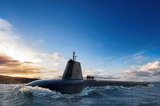
The first Barracuda-class nuclear attack submarine (SSN) was handed over on 6 November in Toulon, to begin its final phase of testing with the French Navy.
This follows the completion of sea trials, which began earlier this year. Suffren was assessed for watertightness and underwater manoeuvrability, the performance of the combat management system, tactical weapons and other high-tech equipment.
Each Barracuda-class submarine has a diving displacement of 5,200t and is powered by a hybrid propulsion system including two turbines and two electric motors. Weaponry includes Scalp Naval land attack cruise missiles, F21 heavyweight wire-guided torpedoes, modernised SM39 Exocet anti-ship missiles and FG29 mines.
French defence procurement agency DGA noted that the second of six Barracuda-class boats will be delivered in 2022 and the final submarine is scheduled to be commissioned in 2030.
However, Shephard Defence Insight notes that the programme had experienced significant delays relating to the development of a new nuclear reactor.
The unit cost is now thought to exceed $2 billion each.
As part of our promise to deliver comprehensive coverage to our Defence Insight and Premium News subscribers, our curated defence news content provides the latest industry updates, contract awards and programme milestones.
Related Programmes in Defence Insight
Related Equipment in Defence Insight

You may also like
More from Naval Warfare
-
![US Navy’s $275 billion BBGN plan hinges on shipyard transformation]()
US Navy’s $275 billion BBGN plan hinges on shipyard transformation
The US Navy’s planned nuclear-powered warship carries a US$275 billion price tag, but the greater story lies in the industrial overhaul needed to build it, from AI-enabled design to digital twins and modular construction.
-
![Industry sees opportunity in Australia’s shift to networked undersea warfare]()
Industry sees opportunity in Australia’s shift to networked undersea warfare
Australia’s new defence innovation strategy indicates a shift from platform-centric to network-centric undersea warfare, with Ocius and Anduril Industries pointing to fast-growing opportunities for local industry.
-
![Asia-Pacific emerges as the largest export market for US-made USVs]()
Asia-Pacific emerges as the largest export market for US-made USVs
Asian customers have placed one of the largest known international purchases of US-built uncrewed surface vessels, highlighting accelerating regional demand for autonomous maritime capabilities and distributed naval operations.
-
![RTX confirms US Marine Corps and US Navy acquire Hadalus UUV]()
RTX confirms US Marine Corps and US Navy acquire Hadalus UUV
RTX told Shephard that the Hadalus UUV has been procured by the US Marine Corps and the Office of Naval Research for operational experimentation as the company prepares additional demonstrations with the US Navy, NATO and AUKUS partners.
-
![The UK joins the movement towards joint procurement]()
The UK joins the movement towards joint procurement
The UK will spend an estimated US$3.89 billion over the next decade in joint naval programmes, a lot of which will be in cooperation with Norway.